27 Jun 2026
Adaptations in Gear Sizing Standards Responding to Body Proportion Shifts Observed in Elite Competitors Across Endurance, Precision, and Contact Categories
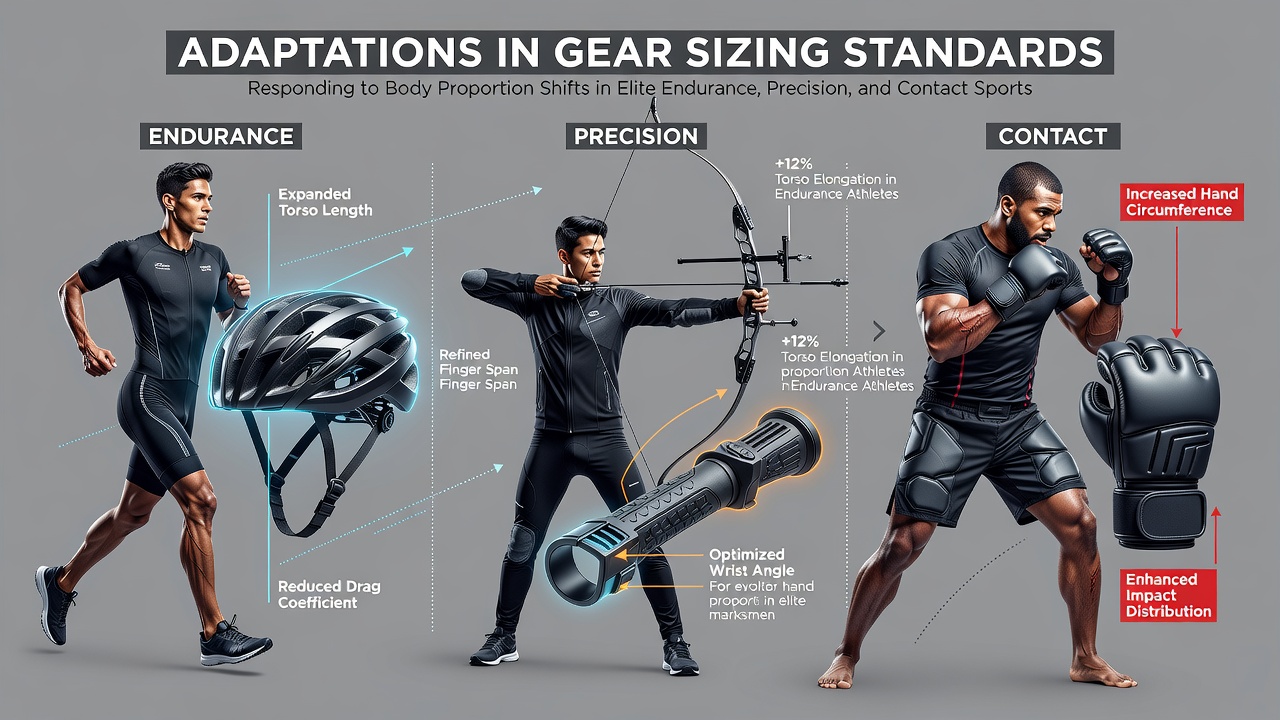
Elite competitors in endurance, precision, and contact sports display measurable changes in limb length ratios, torso girth, and overall skeletal mass that trace back to intensified training regimens plus nutritional advancements since the early 2000s. Manufacturers respond by recalibrating product dimensions rather than relying on legacy charts that date from the 1990s. Regulatory panels now incorporate fresh anthropometric datasets when they issue updated fit specifications, which helps maintain safety margins and performance consistency across disciplines.
Endurance Category Adjustments
Long-distance runners and cyclists exhibit increased average thigh circumference alongside narrower hip-to-waist differentials compared with cohorts measured twenty years earlier. Shoe last shapes therefore incorporate wider forefoot volumes and adjusted heel counters that accommodate higher arches without adding excess weight. Helmet producers extend crown depth options in cycling models because cranial breadth measurements collected at major events show incremental growth. Frame tubing diameters in bicycles receive corresponding tweaks so that reach and stack values align with longer femurs, which reduces aerodynamic drag penalties that would otherwise appear during prolonged efforts.
Precision Sport Updates
Archers, shooters, and racket athletes demonstrate elongated forearm segments relative to upper-arm length, a pattern documented in repeated scans at international training centers. Glove manufacturers lengthen finger stalls while maintaining consistent palm widths to preserve trigger feel and grip stability. Racket handle circumferences expand slightly in the middle section because studies record greater hand span averages among top-ranked players. Sight alignment tools on firearms gain modular cheek-piece extensions that fit higher cheekbones without altering sight radius, preserving accuracy standards established by governing federations.
Contact Discipline Evolutions
Boxers and rugby forwards register greater shoulder breadth and thicker neck circumferences, prompting revisions to headgear interior molds and collar padding layouts. Glove cuff lengths increase to cover extended wrist bones while palm padding zones shift forward to match altered knuckle positions. Protective vests in combat sports add side-panel gussets because torso depth measurements exceed prior norms, which preserves mobility yet maintains impact distribution across certified materials. Boot manufacturers widen toe boxes in cleated footwear to reduce pressure points on feet that carry higher overall body mass.
Implementation Timeline and Data Sources
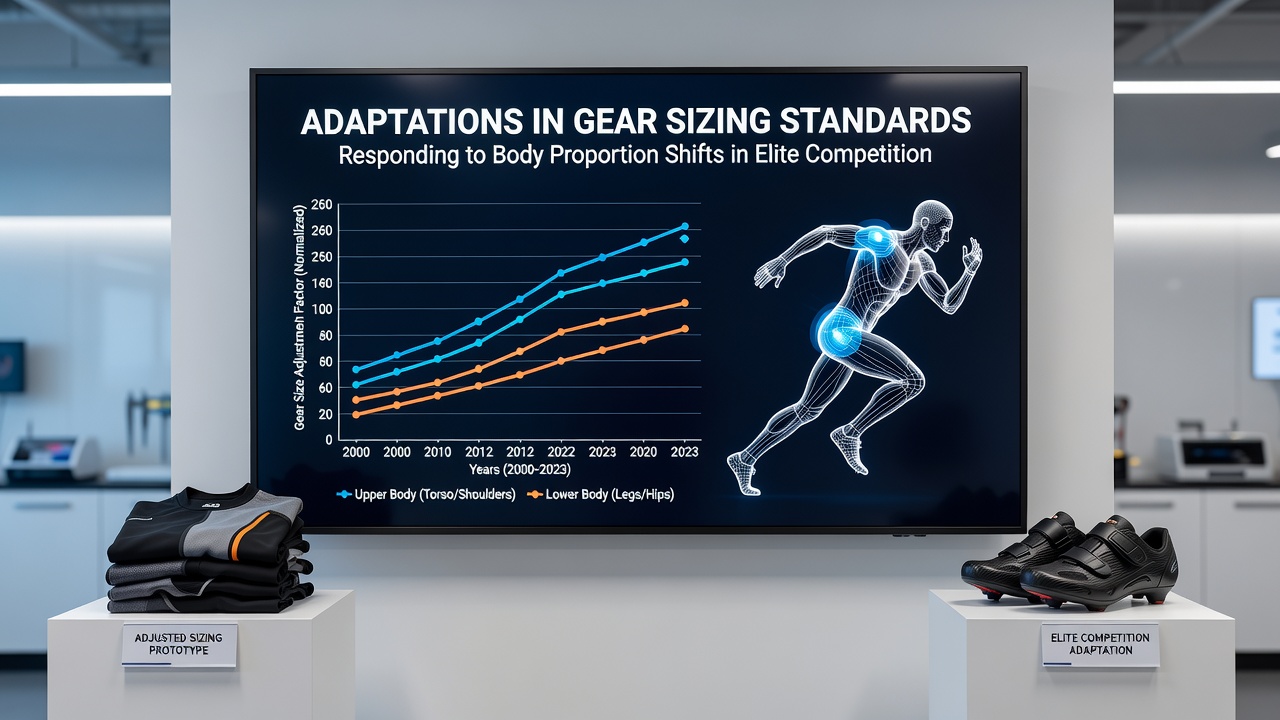
Standards organizations began integrating new datasets in 2024 after aggregated scans from multiple federations revealed consistent deviations exceeding five percent in key dimensions. Revised specifications reached production lines by late 2025, with full rollout targeted for equipment used in events starting June 2026. The European College of Sport Science published supporting measurements that link training volume increases directly to skeletal adaptations, while the Australian Institute of Sport contributed longitudinal records confirming similar trends across its athlete pools. These coordinated releases allow suppliers to synchronize component tooling without disrupting supply chains already strained by material shortages.
Testing protocols now require sample sizes drawn from current elite populations rather than historical averages, which shortens the validation window for new molds and lasts. Calibration rigs measure pressure mapping across contact surfaces to verify that revised dimensions still meet impact absorption thresholds. Observers note that federations in North America and Asia coordinate through shared digital repositories so that sizing nomenclature remains uniform even when regional body proportion clusters differ slightly.
Conclusion
Updated sizing frameworks reflect documented shifts in elite athlete morphology across endurance, precision, and contact categories, supported by fresh measurement programs and synchronized regulatory schedules. Equipment produced under these guidelines maintains certified performance levels while accommodating the physical profiles present in contemporary competition. Continued data collection through 2026 and beyond will guide further refinements as training methods and participant demographics evolve.