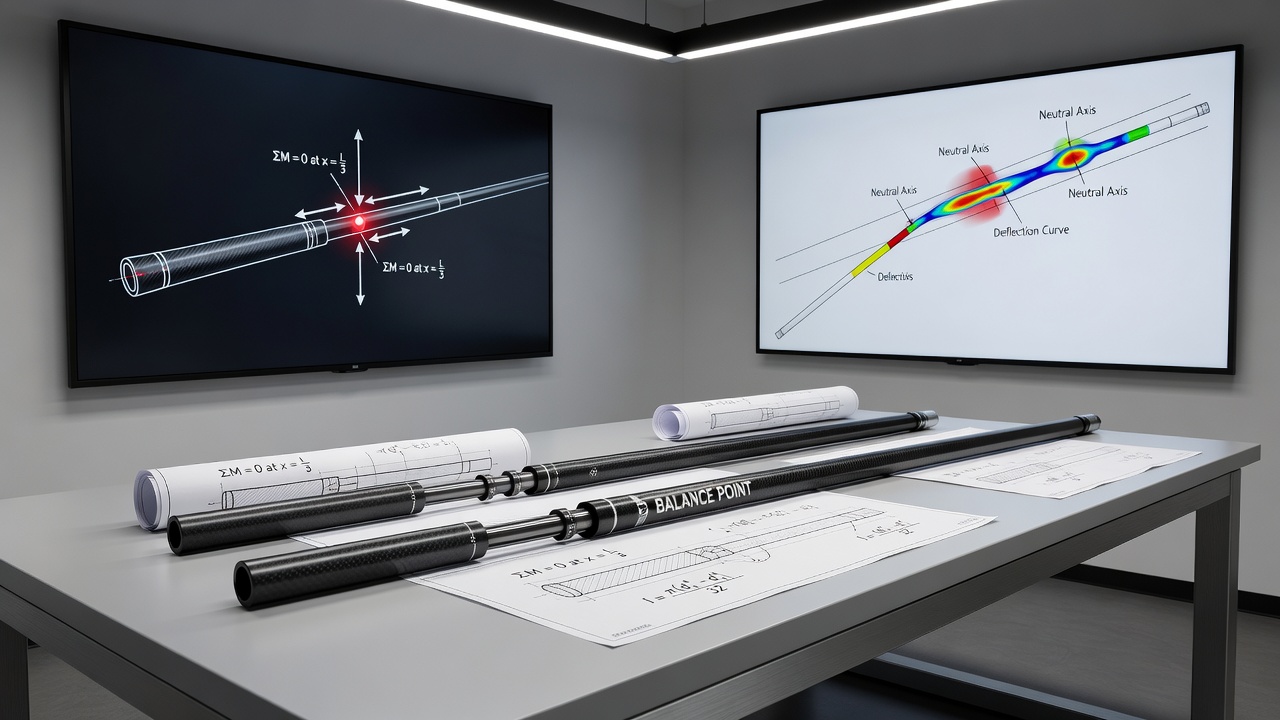
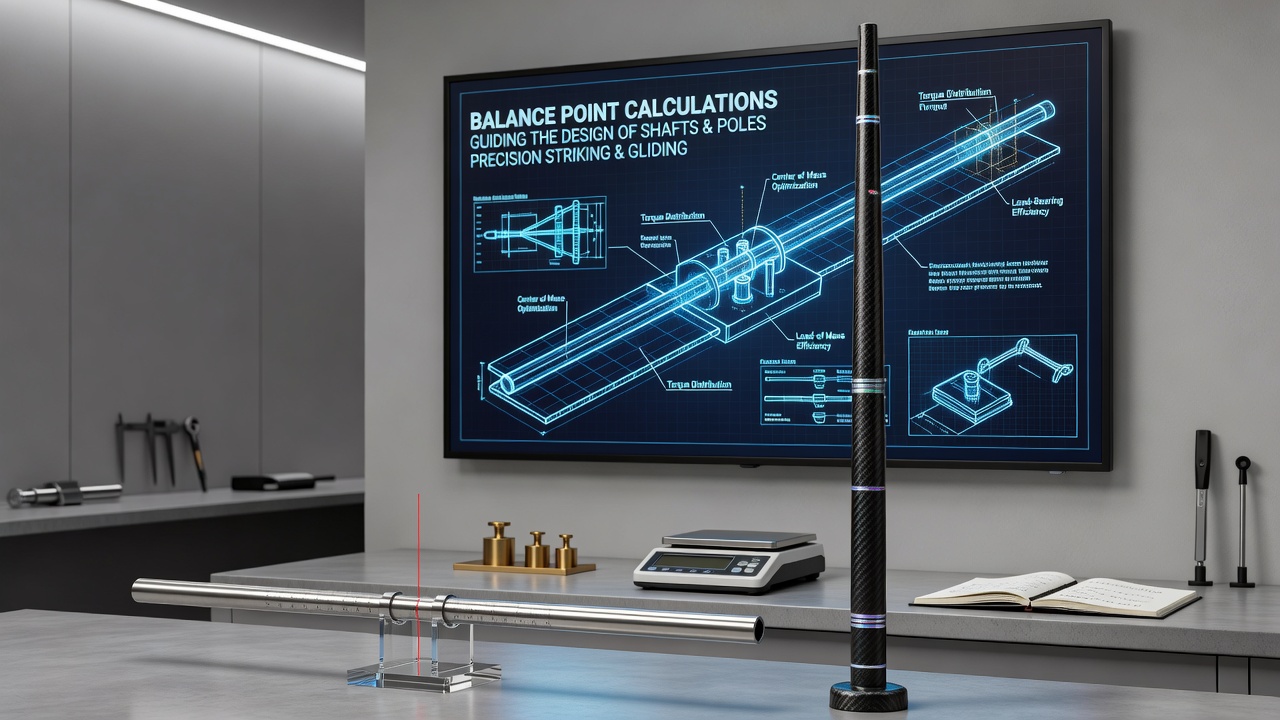
Balance Point Calculations Guiding the Design of Shafts and Poles in Precision Striking and Gliding Sports
Engineers apply precise balance point calculations to shafts and poles across striking and gliding sports because these measurements determine how weight distributes along the length of each implement, and this distribution directly influences swing speed, control, and energy transfer during use. In golf clubs and hockey sticks the balance point sits closer to the head for added power while ski poles and similar gliding tools position it nearer the grip to reduce fatigue over long distances, and manufacturers adjust these locations through iterative testing that combines material density data with athlete performance metrics.
Core Principles Behind Balance Point Placement
Balance point refers to the location where an object achieves equilibrium when supported at a single point, and designers calculate it using formulas that account for mass distribution, length, and intended motion patterns. Researchers measure this point by suspending the shaft or pole at varying positions until it remains level, then record the distance from the handle or grip end, while computer models refine these physical tests by simulating torque and angular velocity under repeated impacts or propulsion cycles.
Striking Sports and Shaft Optimization
Golf club shafts receive balance point adjustments that position the center of gravity between 18 and 22 inches from the grip end in standard driver designs, and this placement allows players to generate clubhead speeds exceeding 100 miles per hour without excessive wrist strain. Hockey stick shafts follow similar calculations yet shift the balance point slightly lower because the puck interaction demands quicker directional changes, and data from high-speed camera analysis shows that a one-inch shift in balance point can alter release velocity by up to 3 percent. Tennis racket shafts incorporate balance measurements that range from even to head-light configurations, and these choices affect both groundstroke stability and serve motion efficiency.
Gliding Sports and Pole Dynamics
Ski poles undergo balance calculations that place the center of gravity roughly 40 to 50 percent down the shaft length from the grip, and this positioning minimizes arm oscillation during the plant phase of each stride while maintaining enough mass at the tip for snow penetration. Cross-country skiing equipment often features lighter overall constructions with balance points adjusted further toward the handle because racers prioritize rapid pole recovery over the heavier downhill variants that emphasize stability on steep terrain. Manufacturers validate these designs through field trials that record force plate data and athlete feedback on perceived effort, and the resulting specifications feed directly into production tolerances that keep variation below 5 grams across batches.
Material Choices and Calculation Adjustments
Carbon fiber composites allow designers to fine-tune balance points more precisely than traditional aluminum or steel because fiber orientation and resin density can be varied along the shaft length without adding bulk, and studies from the University of Western Ontario engineering department demonstrate that hybrid layups shift the balance point by as much as 15 millimeters while preserving flexural strength. Aluminum poles in entry-level gliding equipment receive internal weighting inserts that move the balance point without changing external dimensions, and these modifications maintain cost targets while meeting performance thresholds established by international sports federations.
Testing Protocols and Standards Updates
Standardized testing protocols require repeated drop tests and swing simulations that verify balance point consistency after thousands of cycles, and regulatory bodies in Canada and Australia coordinate with equipment makers to align measurement methods ahead of major competitions. Preparations for the 2026 Winter Games have prompted additional scrutiny of pole designs in August 2026 as teams finalize gear selections, and engineers incorporate real-time sensor data from training sessions to confirm that calculated balance points translate to on-snow results. Sportscience publications track these developments across multiple disciplines while Canadian Heritage sport research summaries provide comparative figures on equipment specifications used at elite levels.
Integration Across Multiple Disciplines
Design teams increasingly share calculation methods between striking and gliding categories because both benefit from reduced vibration at the grip and optimized energy return at the contact point, and software platforms now model entire equipment sets simultaneously to identify cross-sport efficiencies. Observers note that a single material database can serve racket, club, and pole projects when balance equations remain consistent, and this approach shortens development timelines while preserving sport-specific performance targets.
Conclusion
Balance point calculations continue to shape shaft and pole designs because they connect measurable physical properties directly to athletic outcomes in striking and gliding sports, and ongoing refinements in materials, testing, and regulatory alignment sustain incremental performance gains across equipment categories. Data from multiple research programs indicate that small adjustments in these calculations produce measurable differences in speed, control, and endurance, and manufacturers apply these findings consistently as competition standards evolve.