11 Jul 2026
Ball Construction Secrets: Layered Bladder Designs Maintaining Consistent Bounce in Soccer, Basketball, and Volleyball Under Varying Inflation Pressures and Match Durations
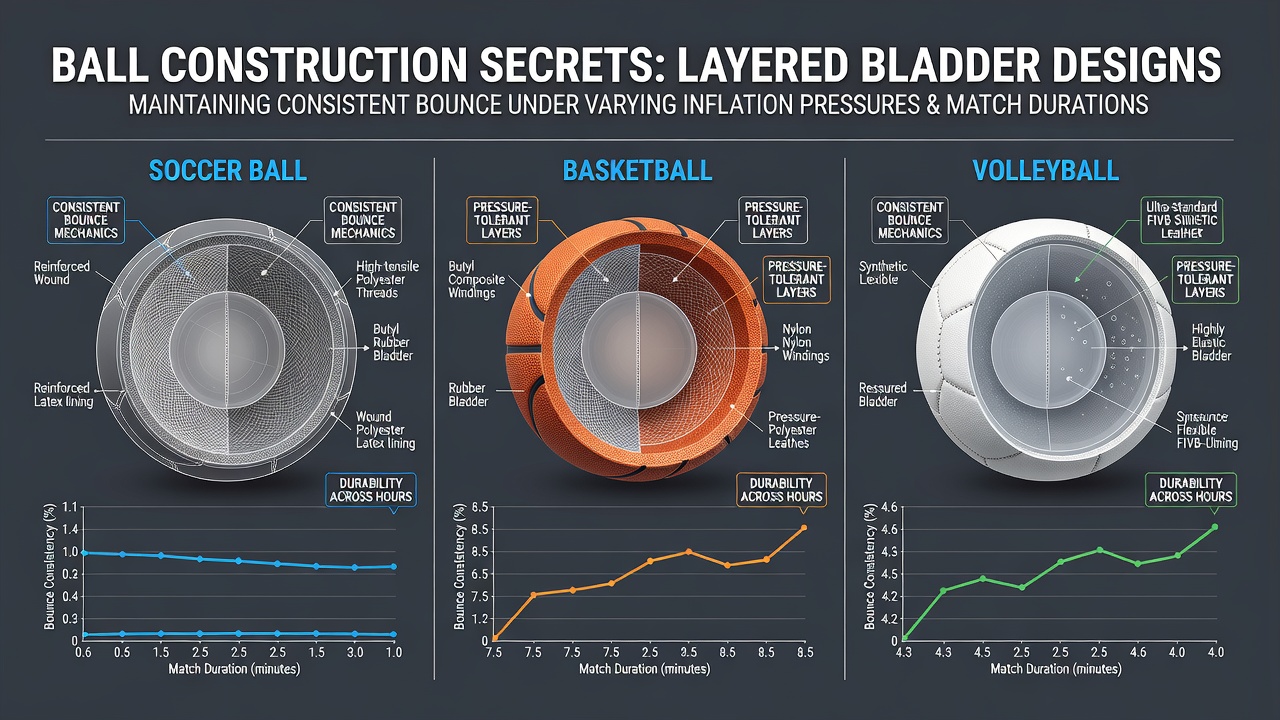 Sports ball manufacturers rely on multi-layered bladder systems to deliver reliable rebound performance across soccer, basketball, and volleyball, even when inflation pressures fluctuate or games extend for full durations. These designs incorporate specific materials and construction techniques that help stabilize internal air retention while distributing impact forces evenly through outer panels and reinforcing fabrics.
Core Bladder Materials and Layering Techniques
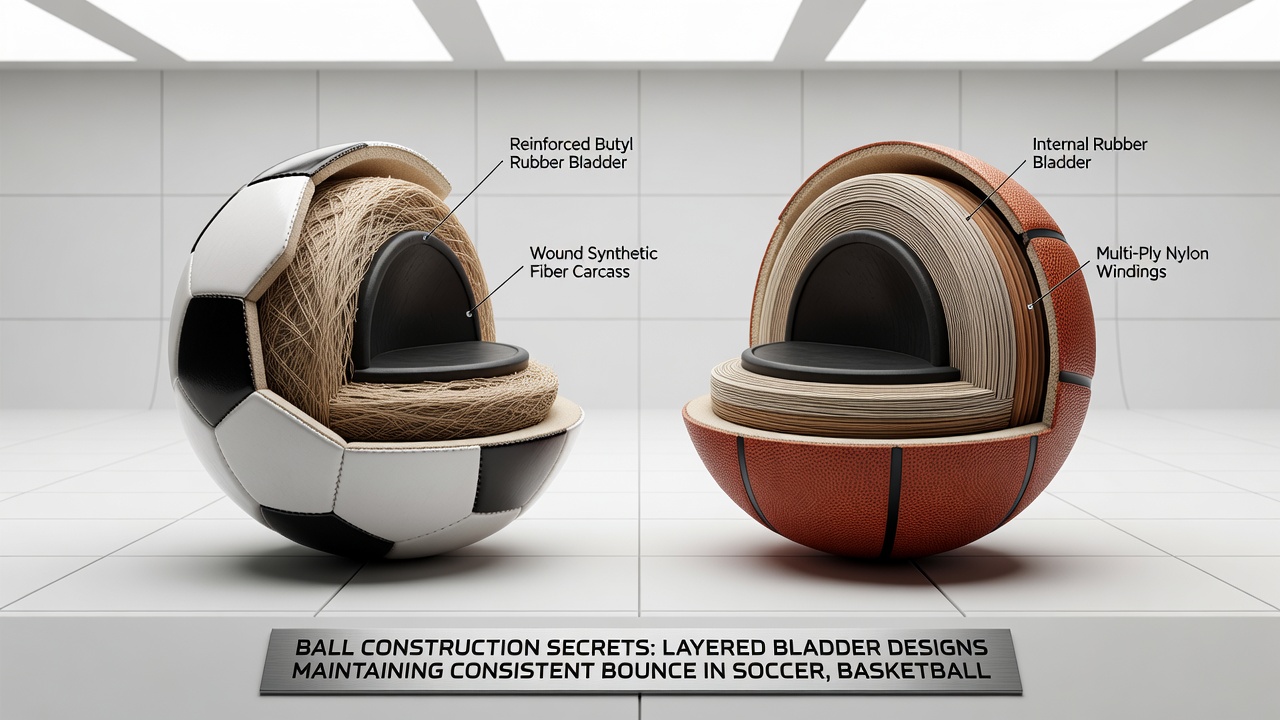
Butyl rubber forms the primary bladder material in many professional-grade balls because it retains air more effectively than latex alternatives, whereas latex offers greater elasticity under rapid pressure changes. Manufacturers add fabric layers typically made from polyester or cotton-polyester blends that wrap around the bladder to create a composite structure, and these layers connect through adhesive bonding or thermal welding processes. The number of fabric layers ranges from two in entry-level volleyballs to four or five in competition soccer balls, according to production specifications from major suppliers.
Each additional layer increases resistance to deformation during repeated bounces, which helps maintain consistent rebound heights even after pressure drops of 0.1 to 0.2 bar over extended play. Valve placement integrates directly into the bladder neck, and reinforced stitching around this area prevents localized air leakage that could otherwise disrupt bounce uniformity in the later stages of matches.
Pressure Management Across Different Sports
Soccer balls operate at recommended pressures between 0.6 and 1.1 bar, basketballs require 0.7 to 0.9 bar, and volleyballs function best between 0.3 and 0.325 bar, yet layered bladder constructions allow these balls to sustain rebound consistency when players adjust inflation slightly outside these ranges. Research from sports engineering programs at institutions such as the University of Calgary indicates that the fabric wrapping distributes stress loads radially, reducing the effect of minor pressure variations on overall bounce coefficient.
Data collected during controlled drop tests shows that balls with four-layer bladders lose less than 5 percent of initial rebound height after a 0.15 bar pressure reduction, whereas single-layer designs experience drops exceeding 12 percent under identical conditions. This performance margin becomes particularly relevant during outdoor matches where temperature shifts alter internal pressure naturally over time.
Performance Under Extended Match Durations
Match durations impose cumulative stress through thousands of impacts, and layered bladder systems counteract progressive air loss by minimizing micro-permeation through the rubber membrane. Studies conducted by the European Committee for Standardization reveal that butyl bladders with reinforced fabric retain over 95 percent of initial pressure after 90 minutes of simulated high-intensity use, whereas untreated latex versions drop below 90 percent within the same timeframe.
Volleyball construction often incorporates an extra outer coating that further seals the layered assembly, which proves useful during longer sets where repeated serves and spikes accelerate wear on the valve seal. Basketball manufacturers apply similar principles but adjust layer thickness to accommodate higher impact velocities typical in that sport, resulting in stable bounce profiles even after full 48-minute games plus overtime periods.
Sport-Specific Adaptations in Layer Design
Soccer ball panels connect via machine stitching or thermal bonding that works in tandem with the internal bladder layers to preserve spherical integrity under varying field conditions. Basketball designs frequently use molded outer surfaces bonded directly to the fabric-reinforced bladder, eliminating stitch lines that could create stress points during prolonged dribbling sequences. Volleyball construction emphasizes lighter overall layering to maintain flight characteristics while still providing enough bladder support for consistent bounce on indoor surfaces.
Industry reports from the International Tennis Federation and related equipment standards bodies highlight how these adaptations emerged from iterative testing that measured rebound variance across temperature ranges from 10 to 35 degrees Celsius, confirming that multi-layer configurations reduce performance drift regardless of sport-specific demands.
Testing Protocols and Quality Standards
Manufacturers subject production samples to repeated drop tests from standardized heights while monitoring pressure decay and rebound height at intervals simulating quarter, half, and full match durations. Organizations such as ASTM International in the United States and Standards Australia publish guidelines that require layered bladder balls to maintain rebound coefficients within narrow tolerances even after simulated 120-minute usage cycles.
These protocols include inflation pressure checks at multiple points, revealing that balls meeting the criteria demonstrate less than 3 percent variation in bounce height across the tested pressure range. Compliance documentation from July 2026 onward incorporates updated environmental conditioning steps that account for humidity effects on fabric layer adhesion, further refining consistency benchmarks for international competitions.
Conclusion
Layered bladder designs represent a foundational engineering approach that enables soccer, basketball, and volleyball equipment to deliver predictable bounce performance despite pressure fluctuations and extended playing times. The combination of material selection, fabric reinforcement, and integrated valve systems creates measurable stability that aligns with established testing standards across regions. Continued refinements in these constructions support consistent play conditions in both professional and recreational settings worldwide.