Biomechanical Sensor Data Refining Custom Fits in Footwear and Hand Protection
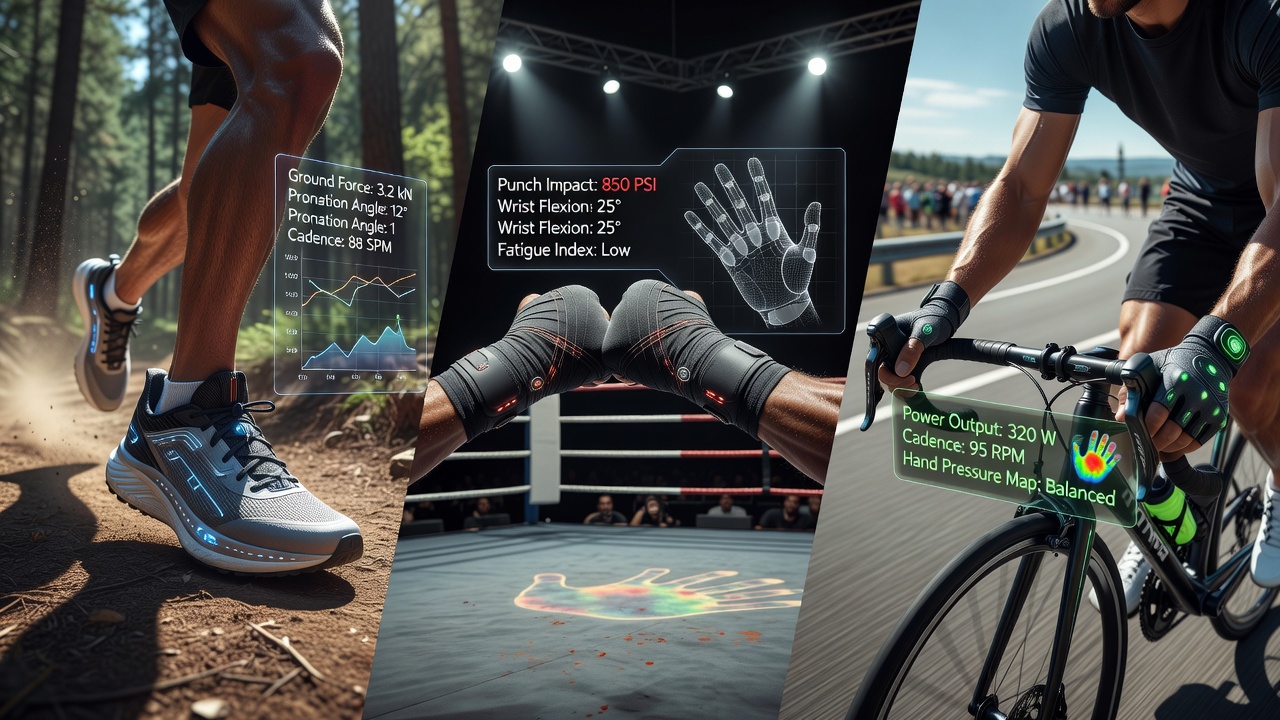
Biomechanical sensor data has become central to custom fit refinements for footwear and hand protection, delivering precise adjustments across running trails, boxing rings, and cycling routes in competitive circuits, and researchers track pressure distribution, gait cycles, and impact forces through embedded devices that capture real-time metrics during training and events. Data from these systems reveals how individual foot shapes and hand dynamics interact with surfaces, which allows manufacturers to modify cushioning zones, strap tensions, and material densities based on accumulated readings rather than generic sizing charts.
Sensor Integration in Footwear for Trail Running
Trail runners equip shoes with pressure-mapping insoles and motion sensors that record variables such as heel strike angles, midfoot loading, and terrain-induced vibrations, while studies conducted by institutions in Canada and the European Union show that athletes who receive refinements guided by these readings experience measurable reductions in localized stress points. Engineers analyze thousands of data points collected over multiple sessions to adjust arch supports and midsole densities, and this process incorporates feedback loops where revised prototypes undergo further testing on varied inclines and surfaces typical of competitive trail circuits.
Hand protection remains less common in pure running disciplines yet gains relevance when athletes combine trail work with cross-training that includes striking movements, and observers note that integrated wrist sensors sometimes appear in hybrid gloves designed for multi-sport competitors. Refinements here focus on securing fit without restricting circulation, since data sets indicate that even minor shifts in wrap tension alter force transmission during repetitive arm swings on uneven ground.
Applications in Boxing Ring Environments
Boxing circuits utilize sensor-equipped hand wraps and gloves that measure punch velocity, knuckle impact distribution, and wrist flexion angles, and data collected during sparring rounds informs iterative changes to padding layers and closure systems. Research from Australian sports laboratories demonstrates that fighters whose gear undergoes custom adjustments based on biomechanical profiles show altered force patterns that align with reduced injury markers tracked over seasonal competitions. Manufacturers calibrate glove curvature and wrist support rigidity according to individual hand breadth measurements derived from sensor arrays, creating fits that maintain protective integrity while accommodating the rapid directional changes characteristic of ring movement.
Footwear in boxing contexts receives parallel attention when athletes incorporate sensor data from training runs, since footwork drills on canvas surfaces generate distinct loading profiles compared with trail conditions, and refinements often involve modifying sole flexibility to match recorded pronation tendencies. Competitive events scheduled through August 2026 continue to feature these technologies as standard components in preparation protocols for professional circuits.
Cycling Route Demands and Sensor-Guided Adjustments

Cyclists rely on sensors placed in cycling shoes and handlebar grips to monitor pedal stroke efficiency, cleat positioning, and sustained pressure on the hands during prolonged efforts across road and off-road routes, and findings from university-led projects in the United States indicate that custom refinements derived from these datasets improve power output consistency by aligning foot and hand interfaces with measured biomechanical needs. Adjustments typically target cleat rotation angles and insole contours for footwear, while hand protection receives modifications to padding distribution that address ulnar nerve pressure points identified through repeated ride data.
Competitive circuits integrate these refinements into equipment approval processes, and governing bodies reference standardized testing protocols that validate sensor accuracy before athletes deploy updated gear in sanctioned races. The approach connects across disciplines because many competitors participate in events spanning running, striking, and cycling, which creates shared data pools that accelerate pattern recognition for multi-sport equipment designs.
Cross-Discipline Data Sharing and Refinement Processes
Shared databases now aggregate biomechanical readings from trail, ring, and route environments, enabling comparative analysis that highlights how similar anatomical structures respond under different load conditions, and this synthesis supports refinements that transfer effectively between sports. Engineers employ algorithms to process high-volume sensor outputs, generating recommendations for material selections and structural modifications that maintain performance across temperature and humidity variations encountered in outdoor circuits.
Regulatory frameworks in multiple regions require documentation of sensor calibration methods and data integrity measures before custom-fitted products receive certification, and compliance timelines influence production schedules for equipment used in international competitions. Athletes and support teams review longitudinal data sets to identify progressive changes in movement patterns, which informs ongoing refinements rather than one-time adjustments.
Conclusion
Biomechanical sensor data continues to shape custom fit refinements for footwear and hand protection by providing objective measurements that guide targeted modifications across running trails, boxing rings, and cycling routes. The integration of these technologies into competitive circuits reflects established practices in sports engineering, where collected metrics drive iterative improvements that align equipment characteristics with individual biomechanical profiles recorded during actual use.