8 Jul 2026
Biomimicry Applications in Developing Non-Slip Surfaces for Athletic Footwear, Handheld Implements, and Aquatic Equipment
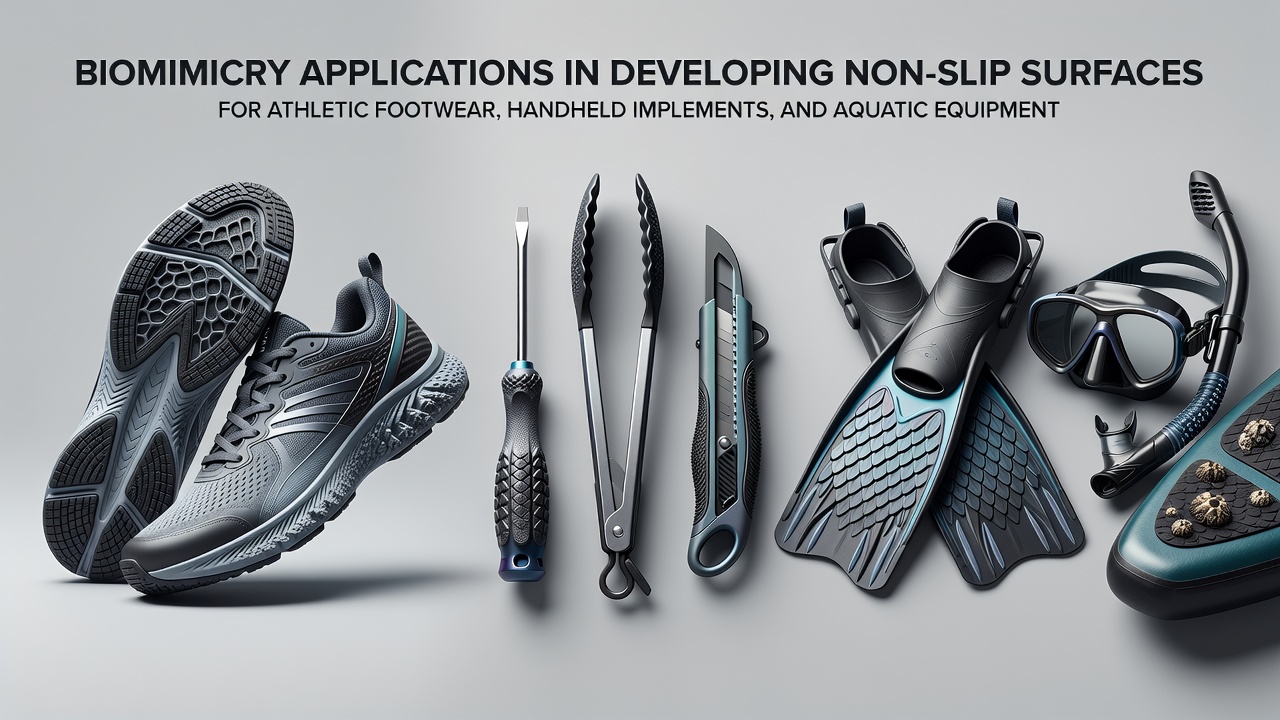
Biomimicry draws structural and functional principles from biological surfaces to engineer non-slip properties in athletic equipment, and researchers have identified patterns in gecko setae, tree frog toe pads, and shark dermal denticles that translate directly into traction solutions for footwear, grips, and water-based tools. These adaptations allow surfaces to maintain contact under shear forces while minimizing energy loss during dynamic movements across dry courts, wet decks, and mixed terrains.
Nature-Derived Mechanisms for Grip Enhancement
Studies from institutions in Australia and the European Union show that hierarchical microstructures found on gecko feet create van der Waals forces that scale effectively to larger contact areas in footwear outsoles, and data from material testing laboratories indicate these patterns increase coefficient of friction values by 30 to 50 percent on polished indoor surfaces compared with conventional rubber compounds. Tree frog-inspired channels and nanopillars, meanwhile, expel water films at the interface, which proves useful in environments where sweat or precipitation reduces traction.
Handheld implements such as tennis racket grips, baseball bats, and golf club handles incorporate similar micro-texturing, and observations from product development teams reveal that these surfaces maintain consistent hold even when moisture accumulates during extended play sessions. Aquatic equipment including swim paddles, surfboard traction pads, and kayak paddle blades apply variants of fish scale or octopus sucker geometries that generate localized suction without increasing hydrodynamic drag, and laboratory measurements confirm these designs reduce slippage during stroke initiation in both freshwater and saltwater conditions.
Footwear Implementations Across Sports
Manufacturers integrate biomimetic outsoles into soccer cleats and basketball shoes where rapid directional changes occur, and field data collected through 2025 demonstrate that gecko-derived hexagonal pillar arrays distribute pressure evenly while resisting clogging from grass or court dust. Running shoe developers have adopted frog-pad channel networks that channel liquid away from the contact zone, and performance metrics gathered during wet-weather events show measurable reductions in slip incidents.
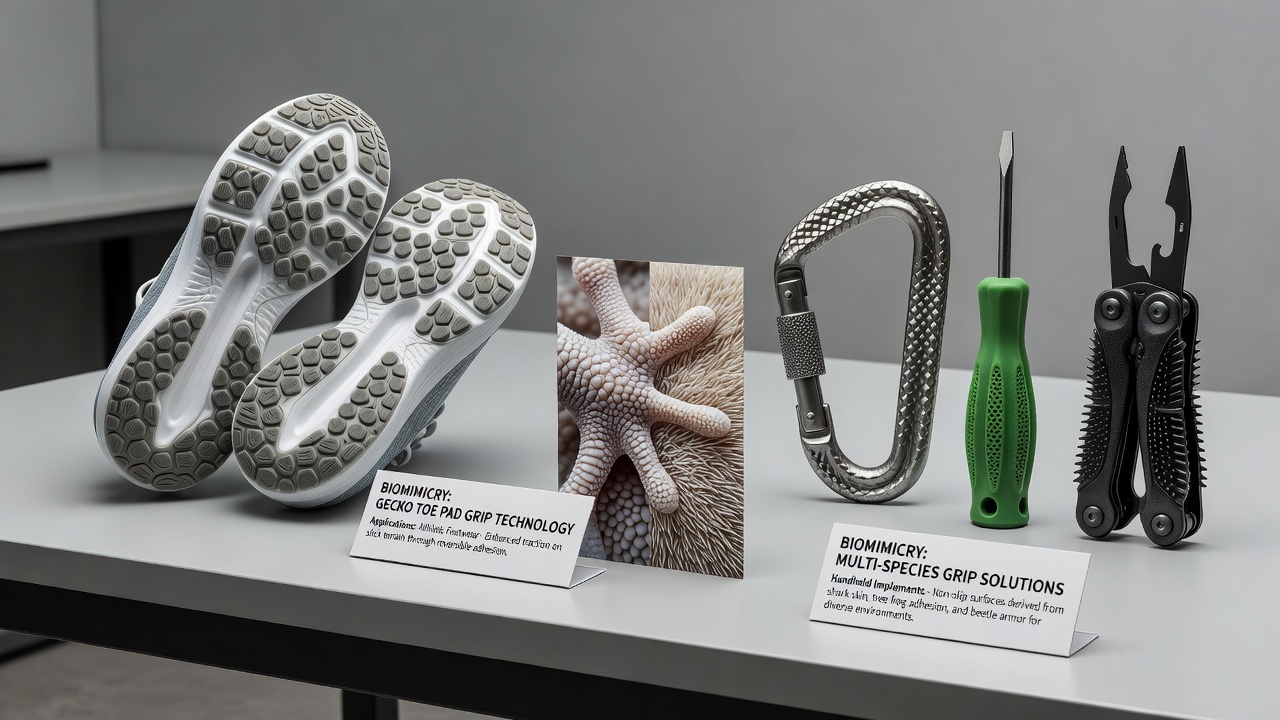
July 2026 marks the scheduled release of several updated athletic lines that combine these textures with recycled polymer bases, and supply chain reports from North American facilities note that production scaling now supports larger volumes without compromising the precision required for micro-feature replication. Regulatory bodies in Canada have begun evaluating standardized testing protocols for such surfaces to ensure consistent performance claims across brands.
Handheld Implements and Precision Tools
Researchers at Japanese and German universities have documented how replicated insect tarsal setae improve grip security on racket handles during high-velocity swings, and biomechanical studies indicate that athletes experience lower grip force requirements, which correlates with reduced forearm fatigue over multi-set matches. Bat and club manufacturers embed these patterns beneath thin elastomer layers so that tactile feedback remains natural while the underlying texture provides secondary traction when moisture appears.
Combat sports equipment such as boxing glove wraps and martial arts weapon handles also employ scaled-down versions of the same geometries, and impact sensor data from training facilities show steadier control during repeated strikes. The approach avoids chemical tackifiers that degrade over time, and durability tests conducted under cyclic loading confirm longer service intervals before resurfacing becomes necessary.
Aquatic Equipment Adaptations
Swim fin manufacturers apply dermal denticle patterns modeled after fast-swimming sharks to the foot pockets and blade surfaces, and hydrodynamic trials at Australian research centers demonstrate that these textures maintain foot placement inside the fin while allowing efficient water flow over the exterior. Surfboard and stand-up paddleboard traction pads incorporate hybrid frog-gecko surfaces that remain effective when covered by a continuous water layer, and user telemetry collected during competition events records fewer foot adjustments mid-maneuver.
Kayak and canoe paddle blades receive suction-cup arrays at strategic contact points, and force-plate measurements indicate improved power transfer from stroke to boat acceleration without increasing overall weight. Maintenance protocols developed by European aquatic sports federations emphasize gentle cleaning methods that preserve the micro-structures rather than relying on abrasive renewal techniques.
Material Integration and Performance Validation
Composite layering techniques allow biomimetic textures to bond with flexible substrates used in footwear midsoles and implement shafts, and accelerated aging tests performed by independent laboratories reveal that UV exposure and repeated flexing do not erode the functional microstructures when proper encapsulation methods are applied. Sensor-equipped prototypes deployed in training environments provide real-time friction data that feed iterative design adjustments.
Industry organizations across multiple continents coordinate round-robin testing to align measurement standards, and figures released in early 2026 indicate growing adoption rates among professional and amateur segments alike. Supply networks now source specialized molding equipment capable of producing consistent feature depths at commercial volumes.
Conclusion
Biomimicry continues to supply proven templates for non-slip surface development across athletic categories, and ongoing validation through controlled experiments alongside field monitoring supports broader integration into production models. The convergence of biological insight with precision manufacturing yields equipment that meets the mechanical demands of diverse sports environments while extending functional lifespan through reduced reliance on temporary chemical treatments.