1 Jun 2026
Cross-Sport Calibration of Impact Sensors in Protective Layers for Boxing Mitts, Ski Boots, and Cycling Helmets
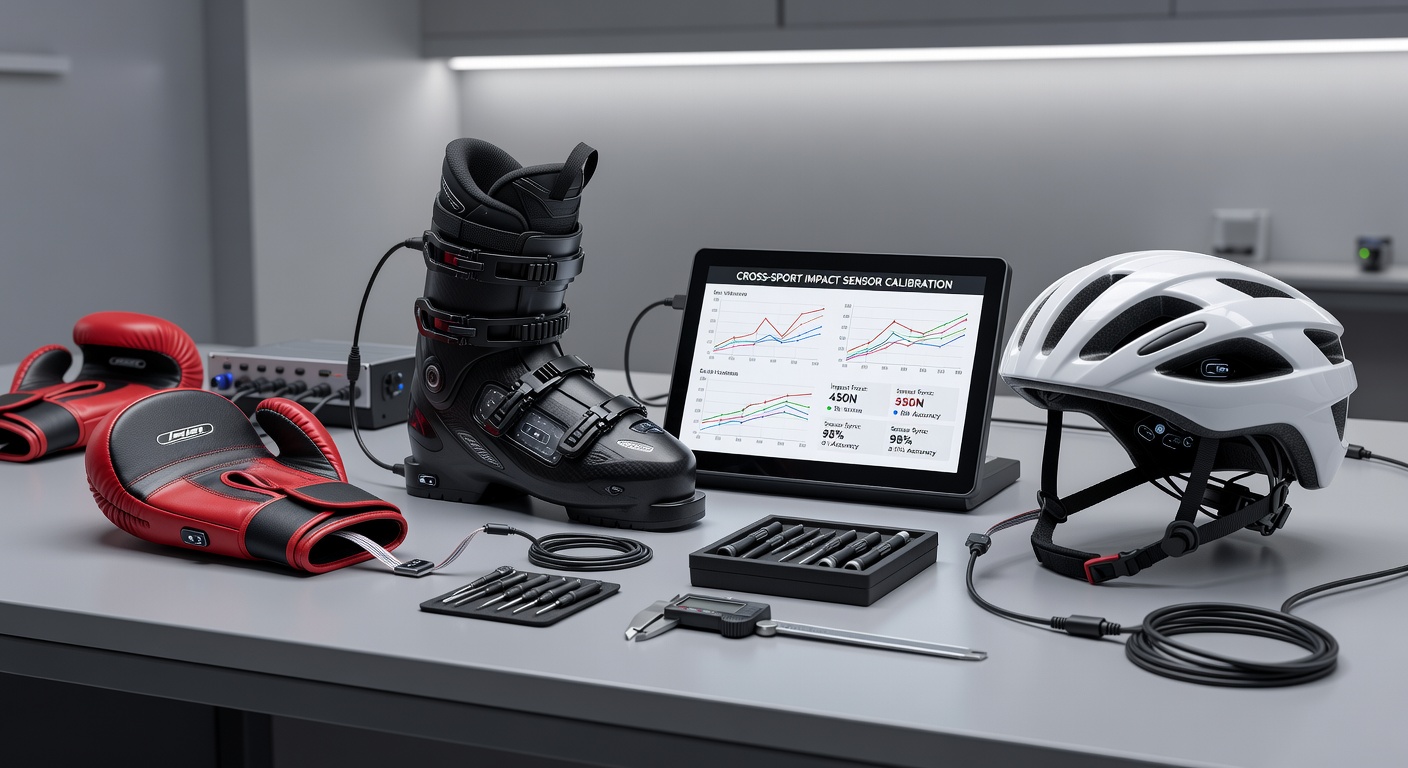
Impact sensors embedded within protective layers now serve multiple sports where force measurement supports both performance analysis adn safety validation, and calibration procedures have begun to cross traditional boundaries between combat training, winter alpine activities, and road cycling. Researchers at institutions focused on biomechanics have developed shared reference protocols that transfer measurement accuracy from one equipment type to another, since the underlying piezoelectric or strain-gauge elements respond to similar physical principles regardless of the outer shell material.
Shared Sensor Technology Across Equipment Types
Boxing mitts incorporate thin film sensors between foam padding layers to record punch forces during sparring sessions, while ski boots use comparable arrays placed near the ankle cuff to detect torsional loads during turns, and cycling helmets position sensors along the EPS liner to capture linear and rotational accelerations in crash scenarios. Calibration rigs apply controlled impacts using drop towers or pneumatic actuators, and the same reference accelerometers serve as gold standards across these applications because the force ranges overlap between 200 g and 800 g in laboratory testing. Standards organizations such as ASTM International publish test methods that equipment manufacturers adapt for each sport, yet the core signal-processing algorithms remain interchangeable once temperature compensation curves and mounting compliance factors receive adjustment.
Calibration Protocols and Reference Standards
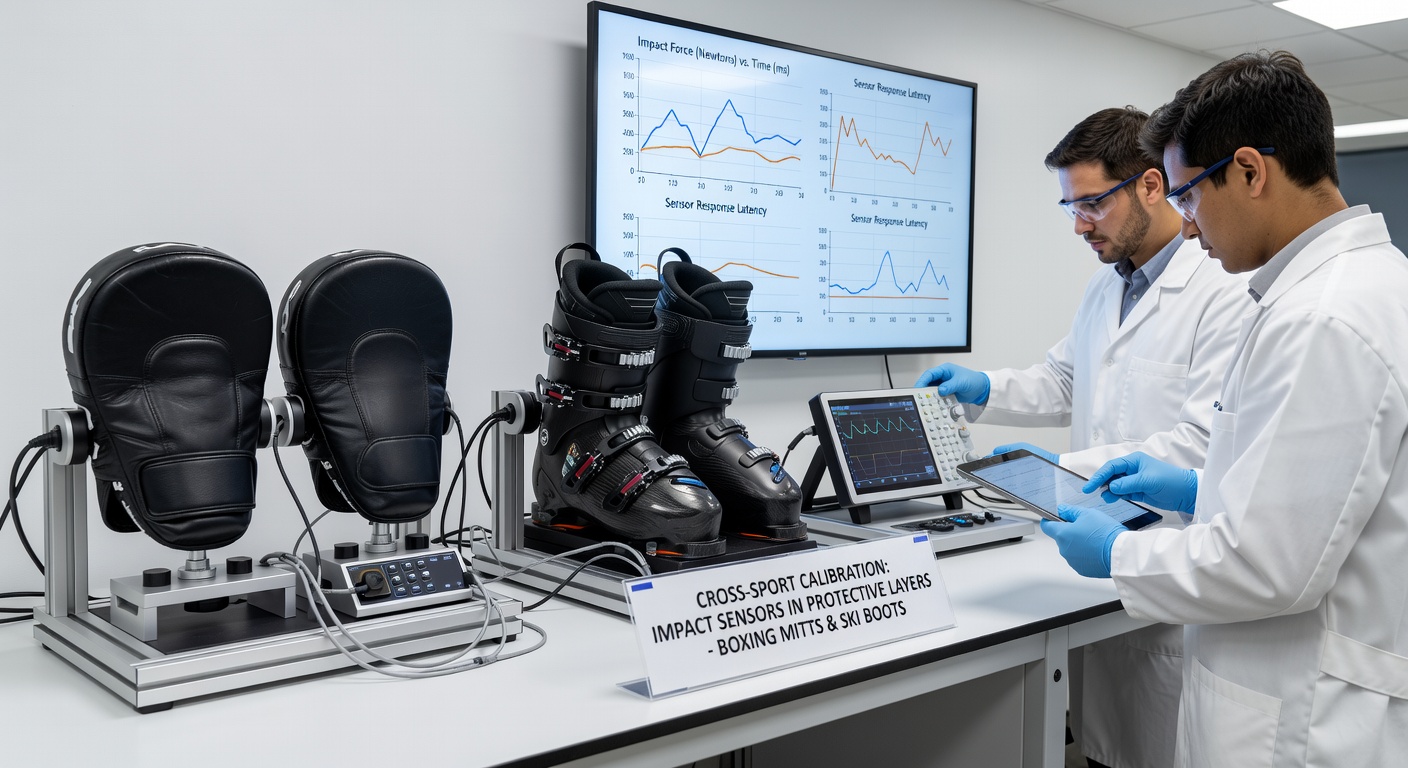
Calibration begins with static load verification followed by dynamic impulse testing at multiple energy levels, and laboratories maintain traceability to national metrology institutes located in different regions. A facility in Canada, for instance, cross-checks sensor output against instruments certified by the National Research Council Canada, whereas European manufacturers often reference CEN technical specifications that define impactor geometry and velocity tolerances. Data acquisition systems sample at frequencies above 10 kHz to capture peak events accurately, and software applies polynomial corrections derived from repeated trials on certified calibration blocks. Observers note that temperature chambers simulate conditions from minus 20 degrees Celsius for ski environments to plus 40 degrees Celsius for summer cycling use, since sensor sensitivity drifts measurably with thermal expansion of the surrounding protective materials.
Transfer of Methods Between Sports
Engineers have transferred calibration sequences originally refined for boxing mitts to ski boot testing because both applications require compensation for viscoelastic creep in polymer layers, and the same multi-axis reference fixture accommodates the curved geometry of either product. Cycling helmet protocols, meanwhile, incorporate rotational impact tables developed for headgear validation, yet those tables now serve double duty when ski boot torsion sensors undergo verification. A joint working group under ISO has circulated draft guidelines that outline unified uncertainty budgets, allowing a single laboratory to issue traceable certificates for all three product categories without duplicating expensive capital equipment. Figures from recent inter-laboratory comparisons indicate agreement within 4 percent when identical sensors travel between sites using boxing, alpine, and cycling calibration fixtures.
Environmental and Material Influences on Accuracy
Moisture ingress affects sensor baseline drift differently across the three applications because boxing mitts encounter sweat, ski boots face snow melt, and helmets experience rain or perspiration during long rides. Calibration routines therefore include humidity soak periods before final verification, and protective layer encapsulation materials receive evaluation for dielectric changes that could alter capacitance-based sensors. Research teams have documented that foam compression set after repeated impacts requires periodic recalibration intervals, typically every 5000 recorded events or six months of field use, whichever arrives first. Manufacturers embed self-check routines that apply known internal reference signals to flag drift before an athlete relies on the readings during training.
Upcoming Developments in June 2026
Industry conferences scheduled for June 2026 will review updated calibration harmonization documents that incorporate findings from field trials conducted across multiple continents, and participants expect discussion of wireless calibration verification methods that reduce downtime for professional teams. Updated reference materials will address emerging sensor types such as printed strain gauges integrated directly into composite shells, and working groups plan to finalize tolerance bands that remain valid when the same sensor design migrates from a boxing mitt to a ski boot cuff or helmet liner. Regulatory bodies in Australia adn the European Union have signaled intent to reference these harmonized procedures in forthcoming equipment certification updates.
Practical Implementation for Equipment Manufacturers
Production lines now route protective components through shared calibration stations where robotic arms present each item to a universal impactor head, and software selects the appropriate energy profile based on the product barcode. Traceability records link each shipped unit to its calibration certificate, which includes temperature and humidity data recorded at the time of testing. Service centers receive portable calibration kits that replicate laboratory conditions within acceptable uncertainty limits, allowing periodic verification without returning gear to the original manufacturing site. Those who maintain fleets of training equipment report that adopting cross-sport procedures has reduced the number of dedicated fixtures required while maintaining measurement consistency between disciplines.
Conclusion
Cross-sport calibration of embedded impact sensors continues to evolve through shared reference methods, standardized uncertainty analysis, and coordinated updates among metrology organizations. Equipment for boxing, skiing, and cycling benefits from interchangeable protocols that preserve accuracy despite differing environmental demands and protective layer constructions, and upcoming meetings in June 2026 will further align these practices across global supply chains.