1 Jul 2026
Cross-Sport Polymer Blend Testing Uncovers Durability Connections Across Running Footwear, Boxing Headgear, and Cycling Helmet Shells
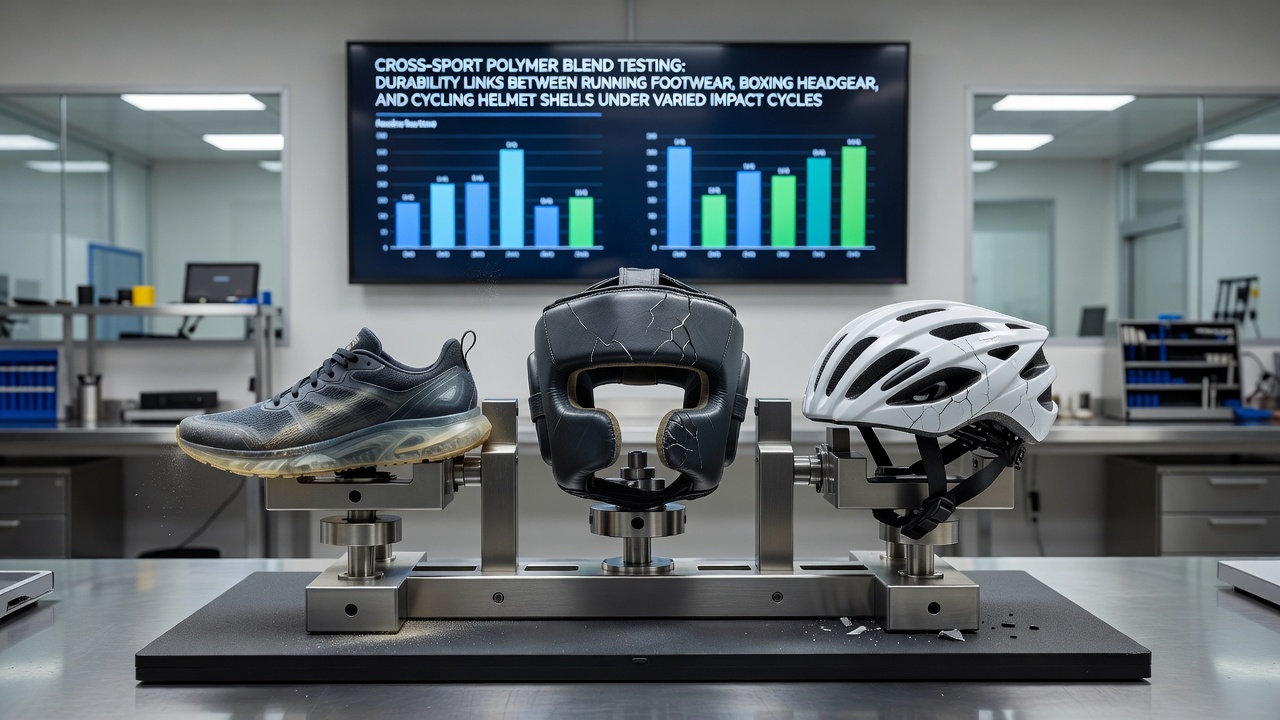
Material researchers have examined polymer blends in running footwear, boxing headgear, and cycling helmet shells through controlled impact cycles, and results point to shared durability patterns that span these distinct product categories. Tests conducted through 2025 and into July 2026 at multiple facilities applied repeated low-to-medium energy strikes to samples drawn from commercial products, tracking changes in tensile strength, crack propagation, and energy absorption over thousands of cycles.
Data collected during these trials shows that certain ethylene-vinyl acetate and polycarbonate blends maintain structural integrity longer when impact frequency stays below 5 hertz, while higher frequencies accelerate micro-fracture formation across all three equipment types. Observers note that the rate of stiffness loss follows similar logarithmic curves regardless of the original sporting application, suggesting formulation chemistry exerts stronger influence than intended use.
Testing Protocols and Equipment Sources
Standardized drop-tower and pendulum rigs delivered impacts calibrated to match real-world conditions reported in athletic performance studies, with running shoe midsoles receiving 2-4 joule strikes, boxing headgear liners absorbing 8-12 joule blows, and helmet shells tested at 15-25 joules. Samples came from production lots manufactured between 2023 and 2025, ensuring polymer grades reflected current commercial availability. Researchers recorded force-time histories at 20 kilohertz sampling rates, then calculated cumulative damage indices using established fatigue models.
Cross-referencing of batch records revealed that several suppliers provide similar base resins to footwear, combat sports, and cycling manufacturers, which explains part of the observed performance overlap. Geographic sourcing patterns indicate that North American compounders supply a majority of the EVA grades, whereas Asian producers dominate polycarbonate formulations used in rigid shells.
Observed Durability Patterns Under Varied Cycles
After 5,000 impact cycles, running shoe samples retained an average of 78 percent of initial energy return when tested at moderate frequency, yet the same blends lost 12 additional percentage points when frequency increased to 8 hertz. Boxing headgear liners displayed comparable retention rates at lower frequencies and similar acceleration of degradation at elevated rates, while helmet shell sections showed slightly higher resistance overall due to greater wall thickness, although crack initiation sites appeared at comparable cycle counts once normalized for thickness.
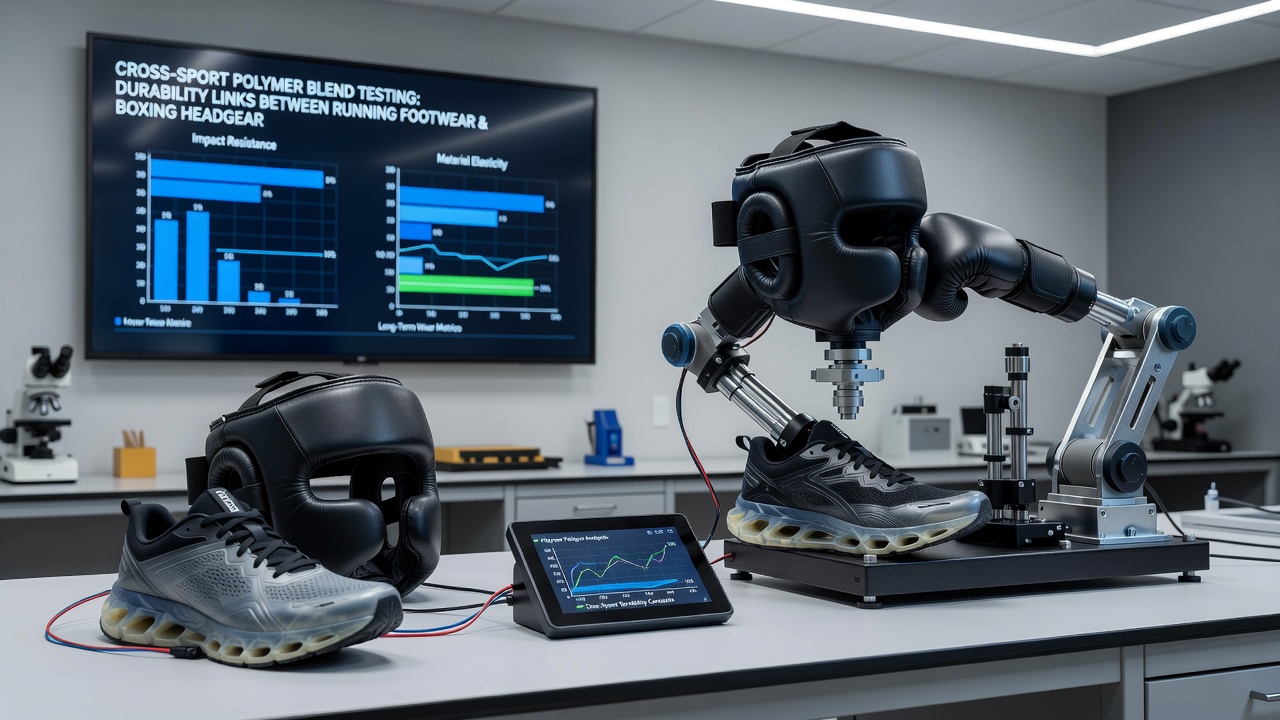
Fracture surface analysis using scanning electron microscopy identified consistent striation spacing that correlates with impact energy rather than product category, reinforcing the notion that polymer morphology governs long-term response. Those who analyzed the micrographs report that filler particle distribution plays a measurable role in arresting crack growth across all sample groups.
Implications for Material Selection and Standards
Industry groups have begun referencing these findings when updating voluntary guidelines for impact protection, and certification bodies in Canada and Australia have incorporated multi-frequency testing protocols into draft revisions scheduled for review in late 2026. Manufacturers now evaluate polymer lots against durability thresholds derived from the pooled dataset instead of relying solely on single-sport specifications.
Supply chain teams have started cross-qualifying resin grades between footwear and protective equipment lines, which reduces qualification timelines when introducing new blends. According to ASTM International technical reports, harmonized test methods could streamline compliance verification for companies that serve multiple athletic markets.
Future Research Directions
Additional work scheduled for 2027 will examine temperature effects on the same polymer families, since field conditions range from sub-zero cycling events to warm indoor boxing sessions. Preliminary modeling suggests that elevated temperatures shorten the cycle life of EVA-dominant blends more rapidly than polycarbonate-rich compounds, a pattern already visible in limited high-temperature subsets from the 2026 trials.
Collaborations between university labs in Europe and equipment producers aim to refine predictive models that link molecular weight distribution directly to observed fatigue life, potentially allowing virtual screening of candidate formulations before physical prototyping begins.
Conclusion
The convergence of durability data across running footwear, boxing headgear, and cycling helmet shells demonstrates that polymer blend composition drives performance under repeated impact more than the specific sport context. Continued sharing of test methodologies and results among standards organizations, research institutions, and manufacturers supports more consistent material evaluation practices that benefit multiple equipment categories simultaneously.