8 Jun 2026
Examining altitude effects on material performance in golf clubs, tennis rackets, and ski poles during high-elevation competitions
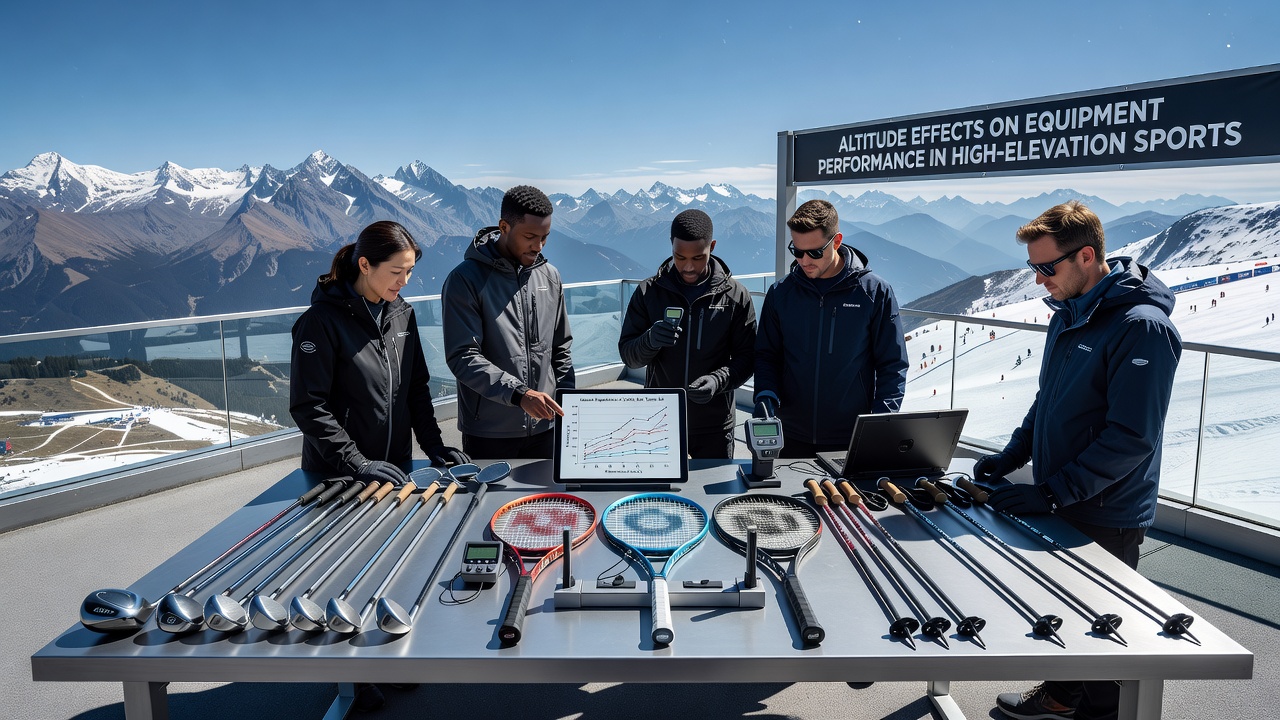
High-elevation competitions place unique demands on sports equipment because reduced atmospheric pressure, lower temperatures, and decreased air density alter how materials behave during use, and researchers have documented these changes across multiple disciplines since systematic testing began in the late twentieth century. Equipment constructed from composites, metals, polymers, and natural fibers responds differently when athletes compete above 1,500 meters, where conditions deviate measurably from sea-level baselines.
Material responses to reduced pressure and temperature
Composite shafts in golf clubs experience contraction when temperatures drop several degrees per 300 meters of ascent, which modifies flexural stiffness and torque transmission, while graphite-epoxy layups show measurable shifts in resonant frequency according to data collected by the National Research Council Canada during controlled chamber experiments. Steel shafts exhibit smaller dimensional changes yet still transfer vibrations differently because colder metal increases Young's modulus, and players notice altered feedback through grips that harden in low humidity environments typical of mountain venues.
Tennis racket frames made from carbon fiber reinforced polymers maintain overall geometry but lose some damping capacity as resin matrices stiffen, whereas string beds lose tension more rapidly because polyester and natural gut respond to both temperature and the lower absolute humidity found at elevation. Technicians at facilities operated by the Australian Institute of Sport have recorded tension losses of 3 to 7 percent within the first hour of play when rackets move from indoor preparation areas to outdoor courts above 2,000 meters.
Performance implications for ski poles and related gear
Ski poles constructed from carbon fiber or aluminum alloys face combined effects of extreme cold and reduced air density during high-alpine events, where pole shafts transmit impact forces with less flex because material stiffness rises, and grip materials become less compliant, altering hand positioning and swing mechanics. Basket and tip assemblies interact with snow that has different crystalline structures at altitude, yet the primary variable remains the pole's structural response rather than aerodynamic drag, which remains secondary for this equipment category.
Testing protocols and data collection practices
Facilities equipped with environmental chambers replicate conditions found at venues such as those scheduled for competitions in June 2026, allowing repeated impact and flex cycles while sensors track strain distribution along shafts, frames, and poles. Teams record baseline performance at 100 meters above sea level, then repeat protocols at simulated elevations of 2,500 and 3,500 meters to isolate variables, and results consistently show that temperature exerts stronger influence on polymer-based components than pressure alone.
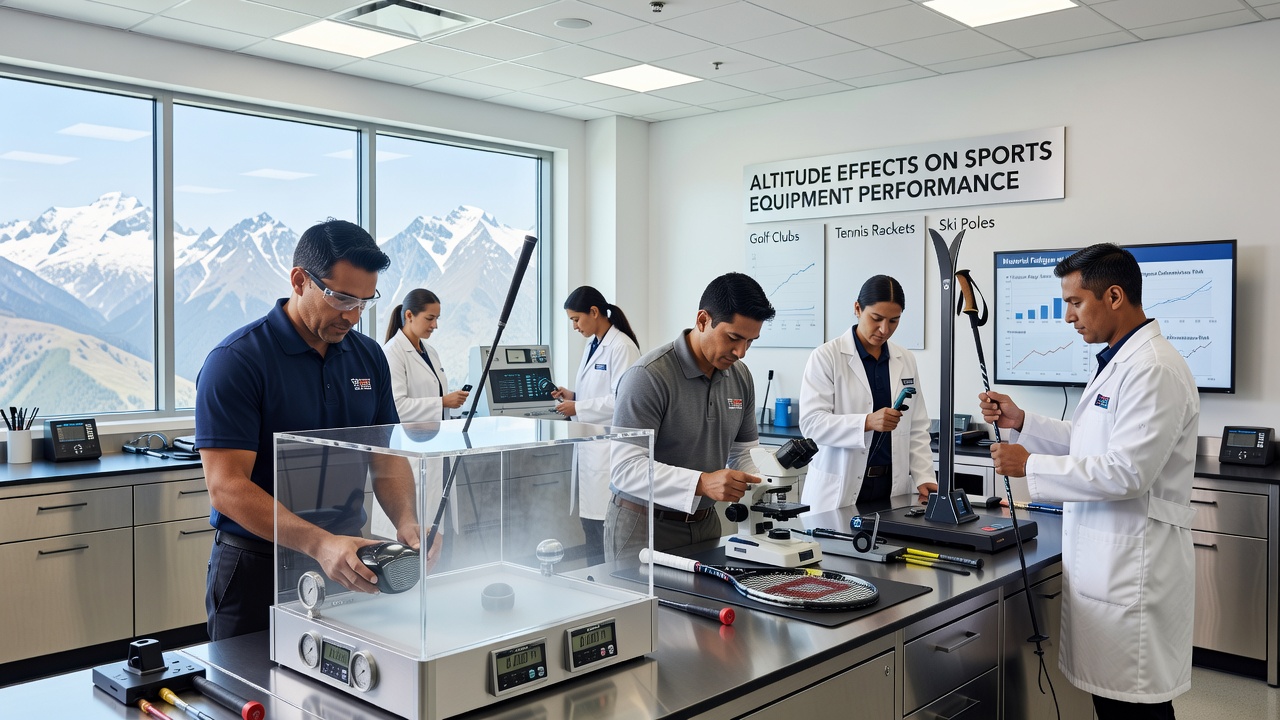
Accelerometers mounted near grip zones capture vibration spectra that shift upward in frequency when equipment cools, while strain gauges along length dimensions document changes in bending moments that affect energy return to the athlete. Observers note that calibration routines must account for these shifts because standard sea-level certification values no longer match in-situ measurements once equipment reaches competition sites.
Equipment adjustments observed at specific venues
Technicians at events held in Colorado mountain resorts adjust golf club lie angles slightly to compensate for altered turf interaction caused by firmer, drier conditions, while stringers in tennis tournaments retension rackets after acclimatization periods that last between 30 and 90 minutes. Ski pole manufacturers supply interchangeable grip options rated for different temperature ranges, and teams traveling to high-elevation races often carry multiple sets so athletes can select poles whose flex characteristics match the colder, stiffer material response.
These modifications rest on empirical measurements rather than theoretical models alone, because combined variables of temperature, humidity, and pressure create interactions that simple calculations overlook. Data sets gathered during multi-year monitoring programs continue to refine predictive tools used by equipment engineers preparing for future high-altitude calendars.
Conclusion
Altitude-induced changes in material performance affect golf clubs, tennis rackets, and ski poles through measurable shifts in stiffness, tension retention, and vibration characteristics, with documented patterns guiding preparation routines at competitions above 1,500 meters. Continued chamber testing and field data collection supply the quantitative foundation that allows consistent equipment behavior across elevation ranges.