6 Jun 2026
How Historical Trade Routes Influenced Material Sourcing in Sports Equipment
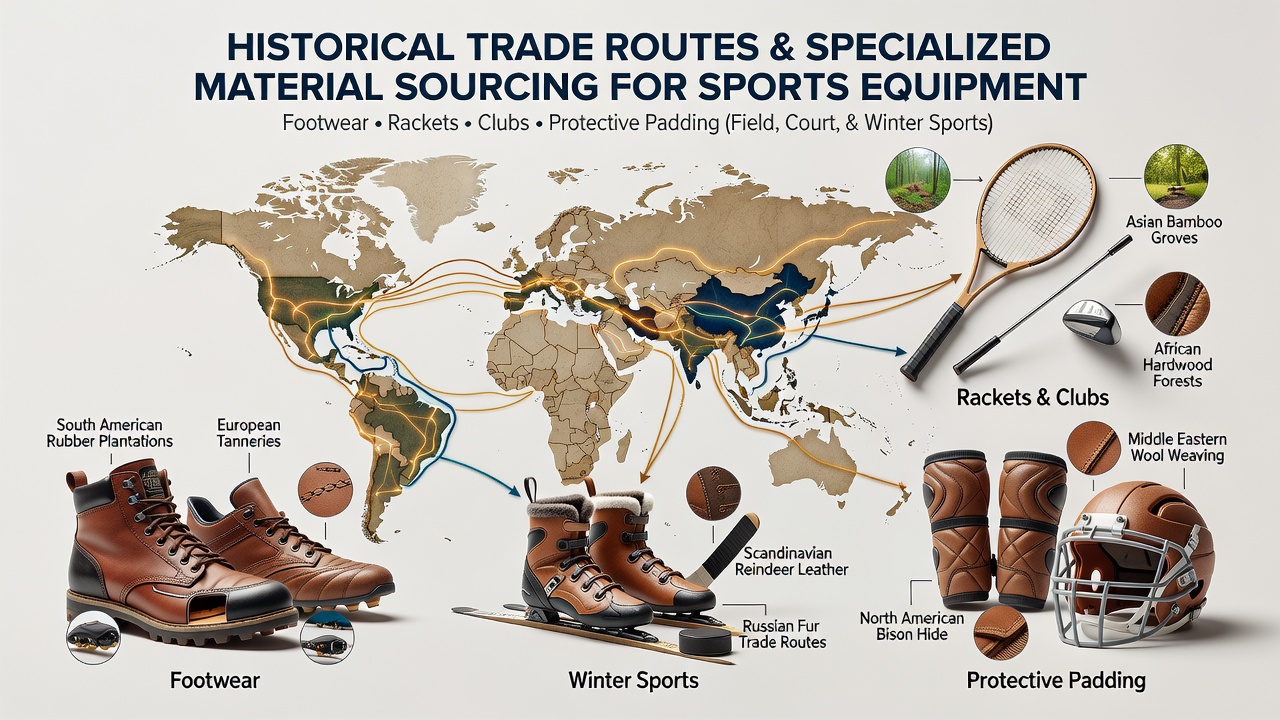
Historical trade networks connected distant regions and carried raw materials that eventually found specialized uses in athletic equipment, while observers note that these exchanges established sourcing patterns still visible in modern field, court, and winter sports gear. Merchants along the Silk Road transported silk, wool, and animal hides across Asia and Europe, and those fibers and leathers became components in early protective padding and footwear linings because they offered durability and flexibility under repeated stress.
Early Exchanges Along Eurasian Corridors
Traders moving between Central Asia and the Mediterranean carried gut from livestock that later supplied stringing material for rackets, and records from the period show how consistent supply lines allowed craftsmen to select animal intestines with specific tensile properties for court sports equipment. At the same time, cotton and hemp reached European workshops through overland and maritime links, providing breathable uppers for shoes used in field games where athletes required ventilation during extended play.
Research from the Australian National University indicates that these routes also moved lightweight woods suitable for early club heads, and the steady availability of maple and ash influenced design choices in striking implements across multiple sports. Because demand grew steadily, suppliers began grading materials by quality, which created standardized inputs for protective padding in winter activities where layered fabrics needed to withstand cold and abrasion.
Maritime Routes and New World Materials
After the opening of transatlantic and transpacific sea lanes, rubber from the Amazon basin reached European and Asian ports, and this elastic substance transformed footwear construction for field and court athletes who needed better grip and shock absorption. Historians trace how rubber soles replaced earlier leather or wooden bottoms in soccer cleats and tennis shoes once reliable shipping reduced costs and ensured volume deliveries.
Feathers and down from North American and Asian waterfowl followed similar paths and entered production of quilted padding for winter sports jackets and helmets, while data from shipping manifests reveal that consistent annual cargoes allowed manufacturers to experiment with layered constructions that improved thermal regulation without adding excessive weight. And yet these same routes brought dyes and tannins that preserved leather components in rackets and clubs against moisture during outdoor use.
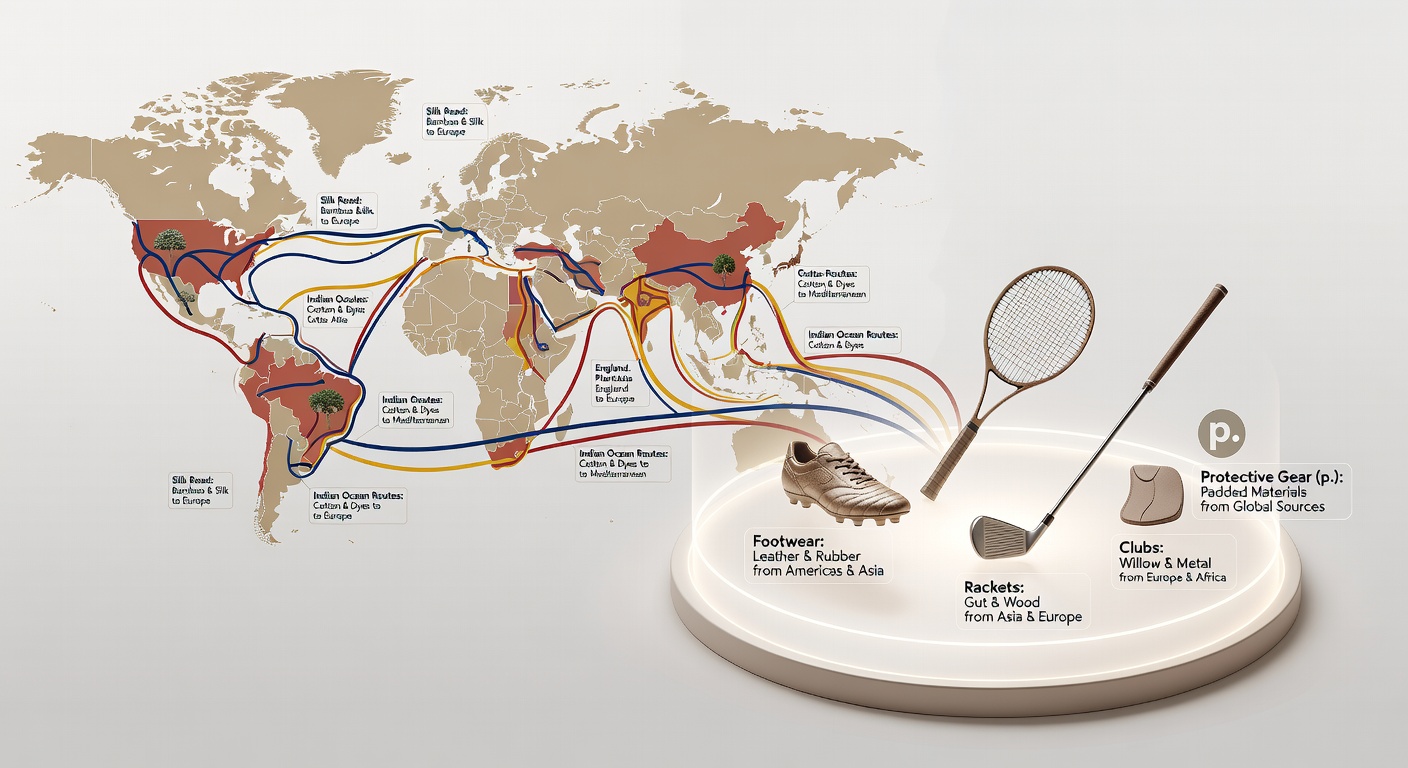
Specialization in Protective and Performance Components
Colonial-era connections between South Asia and European markets supplied bamboo and cane that frame makers adopted for racket handles because the materials resisted warping in humid court environments, and studies of surviving artifacts confirm that these choices improved player control during high-speed swings. Meanwhile, African and Middle Eastern trade in goatskin and sheepskin provided supple leather for padded gloves and shin guards used in field sports, where flexibility around joints remained essential.
Those who study logistics note that seasonal monsoon and trade wind patterns dictated when fresh batches of cork and felt arrived for winter sports padding, and the resulting inventory cycles encouraged stockpiling practices that still appear in contemporary supply chains for ski boots and hockey shin guards. In June 2026, an exhibition at the Maritime Museum in Lisbon will display preserved samples of these traded materials alongside reconstructed early sports items, illustrating direct lineage from route endpoints to equipment specifications.
Long-Term Effects on Equipment Standards
Continued refinement along these historical pathways led to regional specialization, such as European workshops focusing on gut processing for tennis and badminton strings while Asian producers developed lacquered wood treatments for club shafts. Evidence from trade ledgers shows that quality controls introduced centuries ago, including tensile testing of fibers and moisture content checks on woods, became embedded in later manufacturing standards applied to both amateur and professional gear.
Protective padding benefited particularly from blended textiles that combined silk from one route with cotton from another, creating breathable yet dense layers that reduced impact transmission in contact sports. Observers tracking material provenance find that many current suppliers still source from the same geographic corridors, although modern transport has shortened delivery times dramatically compared with earlier centuries.
Conclusion
Trade routes therefore did more than move goods; they established selection criteria, quality benchmarks, and regional expertise that continue to guide material choices for footwear, rackets, clubs, and padding across diverse athletic disciplines. The patterns set by these networks explain why certain fibers, elastomers, and woods remain preferred inputs even as production technologies advance.