13 Jul 2026
How Polymer Chain Reactions to Humidity Cycles Alter Grip Retention Timelines in Multi-Sport Footwear and Handles
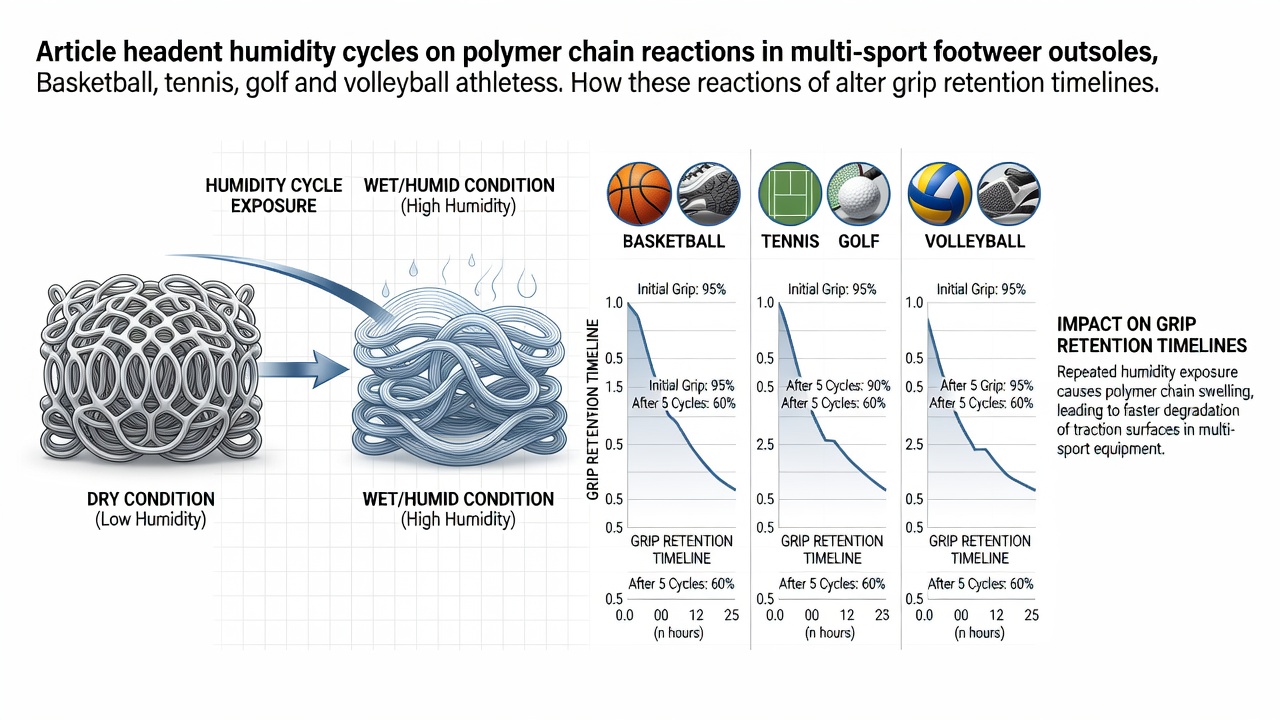
Materials scientists track how repeated humidity cycles trigger molecular shifts in polymer compounds used across basketball footwear, tennis racket grips, golf club handles, and volleyball shoes. These reactions modify surface friction coefficients and reduce effective grip duration under standard use conditions. Data from controlled chamber tests show that polyurethane and rubber blends absorb moisture during high-humidity phases then release it during dry intervals, which stretches or contracts chain segments at the microscopic level.
Polymer Responses Under Cyclic Humidity Exposure
Observers note that thermoplastic elastomers in these products undergo hydrolysis when ambient relative humidity exceeds 70 percent for extended periods, while subsequent drying phases below 30 percent prompt chain realignment and surface hardening. Researchers at the University of Alberta documented these shifts through spectroscopic analysis of samples cycled between 20 and 90 percent relative humidity over 30-day intervals. The resulting micro-cracks and altered cross-link density directly shorten the period during which grip force remains above 85 percent of initial values.
Studies indicate that basketball shoes incorporating ethylene-vinyl acetate midsoles paired with rubber outsoles lose consistent traction faster in regions with pronounced seasonal humidity swings, such as coastal training facilities. Similar patterns appear in volleyball footwear designed for indoor courts that still experience air-conditioning fluctuations capable of driving daily humidity swings of 40 percentage points.
Sport-Specific Grip Retention Patterns
Tennis players encounter accelerated degradation on overgrips and synthetic leather handles because racquet frames transfer vibrational energy that compounds humidity-induced chain scission. Golf club grips made from corded rubber compounds exhibit measurable increases in slip angle after roughly 120 hours of cumulative exposure to cycles between 25 and 85 percent relative humidity, according to field data collected by equipment testing laboratories in Australia. Basketball and volleyball athletes experience parallel effects on court shoes, where lateral cutting motions place additional shear stress on already compromised polymer surfaces.
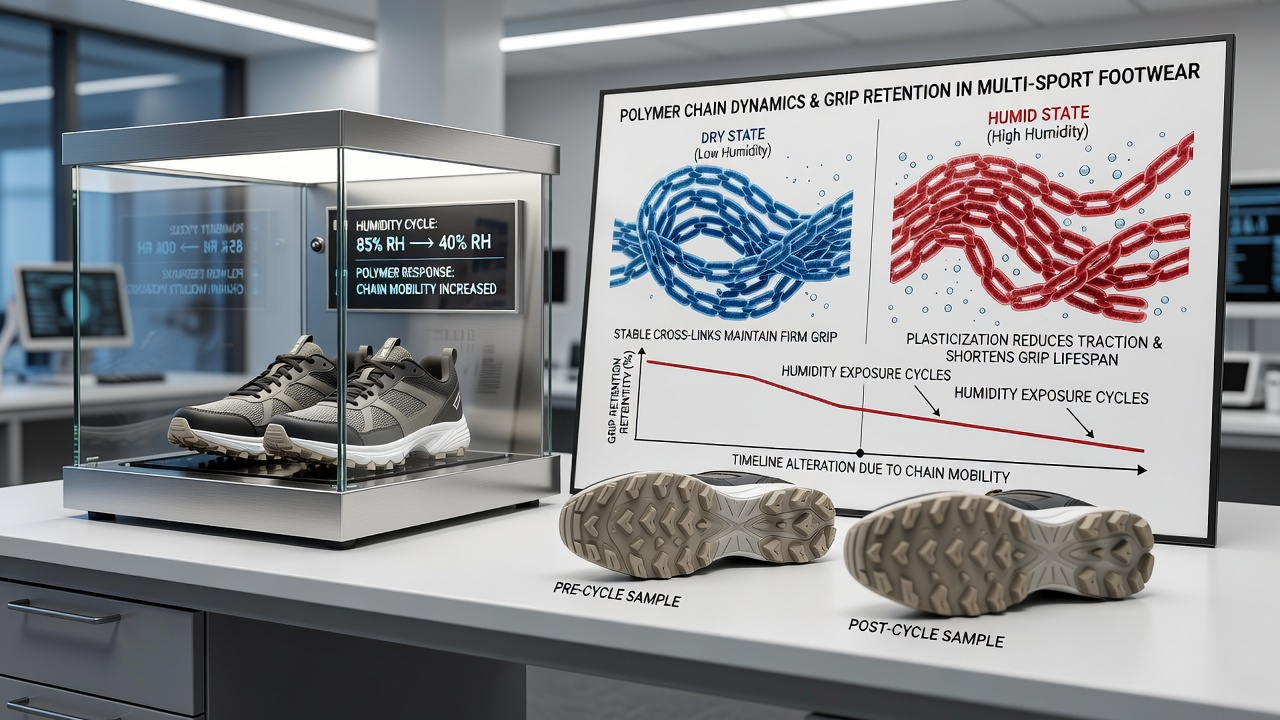
Equipment managers report that replacement intervals shorten by 15 to 25 percent for items stored in non-climate-controlled environments compared with those kept in stable 45-to-55 percent humidity ranges. In July 2026, ASTM International published updated test protocols that standardize multi-cycle humidity exposure for footwear and handle materials, enabling manufacturers to predict retention timelines with greater precision across these four sports.
Measurement Methods and Predictive Models
Laboratories apply repeated friction testing under simulated load cycles to quantify how many hours of use remain before coefficient-of-friction values fall below sport-specific thresholds. Models developed by the National Research Council Canada correlate chain mobility data with real-world retention periods, showing that golf grips retain functional performance for approximately 180 hours under moderate humidity cycling while tennis overgrips reach the same threshold after 95 hours. These timelines shift when athletes train or compete in environments where dew-point temperatures create condensation inside storage bags or lockers.
Cross-sport comparisons reveal that volleyball shoes, which experience frequent vertical loading and lateral slides, display earlier onset of grip loss once polymer surfaces develop micro-texture changes from humidity cycling. Basketball footwear follows a comparable curve yet benefits from thicker outsole layers that delay the point at which traction drops become noticeable during play.
Storage and Maintenance Factors
Facilities that maintain consistent humidity control through dedicated equipment rooms extend average grip retention across all four sports by limiting the amplitude of daily moisture fluctuations. Manufacturers incorporate desiccants and vapor-barrier packaging in some product lines to reduce initial chain exposure before items reach end users. Data collected from professional training centers demonstrate that rotating multiple pairs or sets of equipment further distributes humidity-induced wear and maintains more consistent performance windows.
Conclusion
Polymer chain reactions triggered by humidity cycles produce measurable reductions in grip retention timelines for basketball, tennis, golf, and volleyball equipment. Standardized testing protocols introduced in 2026 provide clearer benchmarks for predicting these changes across different material formulations and usage environments. Equipment designers continue to refine polymer blends and surface treatments to extend functional periods while accounting for the environmental conditions athletes encounter during training and competition.