How Regulatory Standards for Impact Absorption Have Evolved in Head Protection
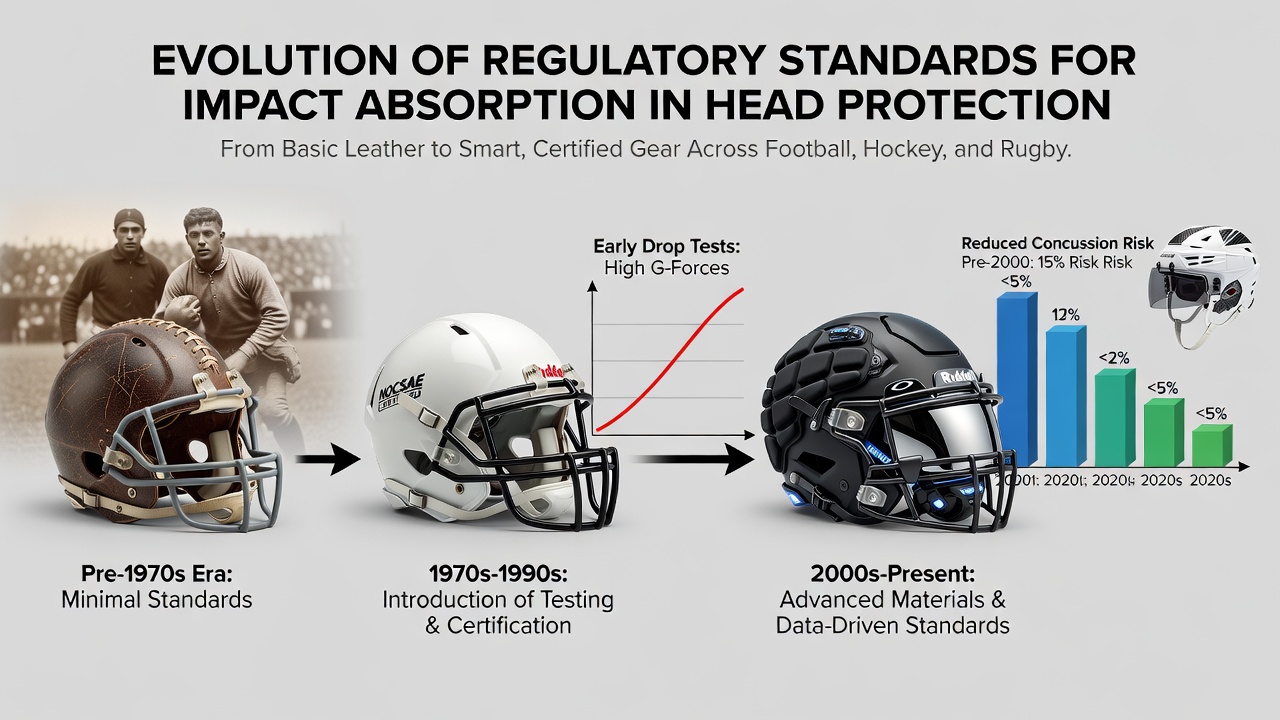
Regulatory standards for impact absorption in head protection started with basic material tests in the early twentieth century and grew into detailed protocols that cover multiple sports, while organizations in different regions updated requirements based on new data from laboratory simulations and field incidents.
Foundations in Contact Sports
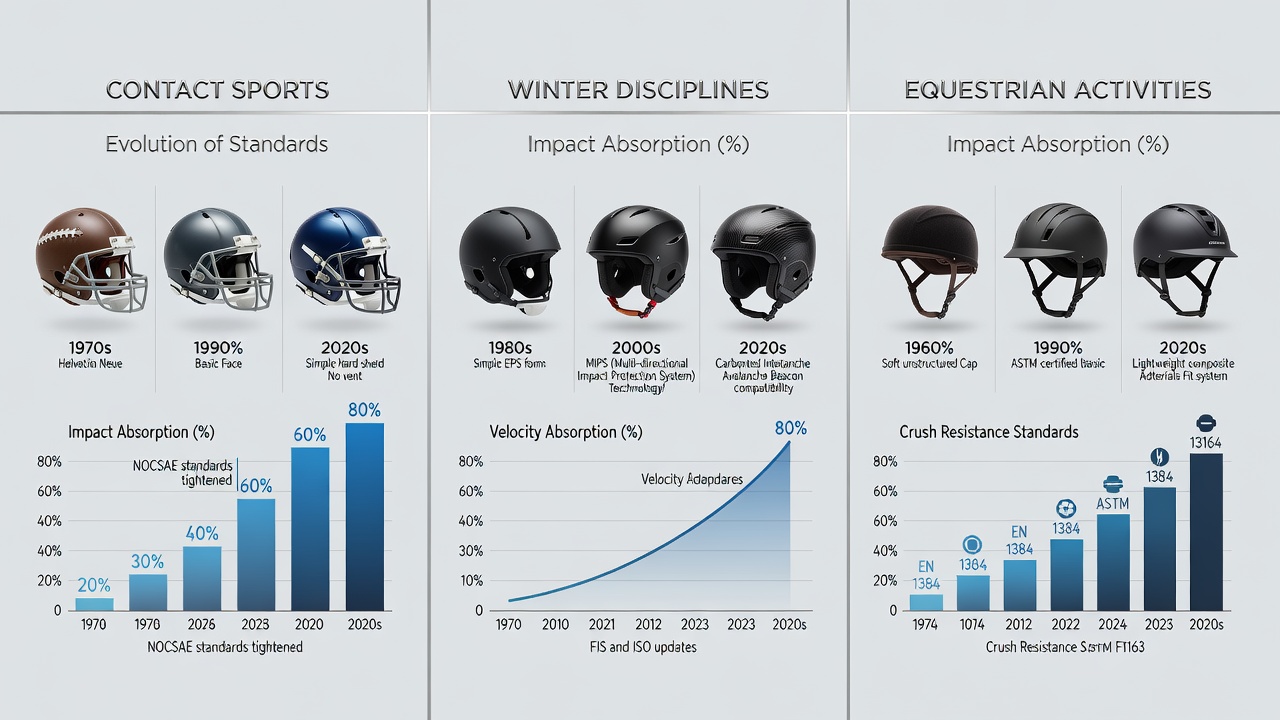
American football led early changes when the National Operating Committee on Standards for Athletic Equipment introduced its first helmet standard in 1973, and this focused on linear impact forces measured through drop tests that simulated collisions at various angles. Researchers tracked how foam liners compressed under repeated hits, and data from university labs showed that older leather designs failed to manage energy transfer effectively, which prompted manufacturers to adopt polycarbonate shells paired with suspension systems. By the 1990s updates incorporated rotational force measurements, and standards required helmets to limit peak accelerations below specific thresholds during oblique impacts that mimic real tackling scenarios.
Winter Discipline Adaptations
Winter sports followed a parallel path as alpine skiing organizations adopted European EN 1077 requirements in the late 1990s, and these tests evaluated helmets against both high-speed linear drops and lower-energy side impacts that occur during falls on icy slopes. Snowboarding and ice hockey governing bodies later aligned their criteria with ASTM F2040 and F1492 protocols, while Canadian researchers contributed findings on cold-temperature performance that revealed how certain liners stiffened below freezing and reduced absorption capacity. Standards evolved further when governing groups added multi-directional impact rigs, and figures from ongoing studies indicated that modern designs must handle repeated low-magnitude events without permanent deformation.
Observers note that shared testing equipment between skiing and hockey helmet programs helped standardize velocity ranges, yet regional differences persist because European protocols emphasize lower drop heights while North American versions include higher-energy benchmarks.
Equestrian Activity Requirements
Equestrian standards developed separately through organizations such as ASTM International and the European Committee for Standardization, and the ASTM F1163 specification introduced in 1990 required helmets to pass both flat and hazard anvil drops that replicate fence impacts or rotational falls. Updates in the 2000s incorporated crush resistance tests for the outer shell, and data collected from event medical reports showed that rotational brain injuries remained a concern even when linear forces stayed within limits. Australian and New Zealand regulators added their own AS/NZS 3838 criteria that aligned closely with European models, and these documents stressed ventilation alongside absorption performance to address heat buildup during long competitions.
Cross-Discipline Influences and Recent Updates
Cross-sport calibration accelerated when impact sensor technology became common in training equipment, and programs in boxing, skiing, and riding began sharing data sets that revealed consistent patterns in how repeated sub-concussive events accumulate. In August 2026 several working groups plan to review combined test matrices that blend linear, rotational, and repeated-impact protocols, while ISO technical committees continue to harmonize language across documents used in different continents. Manufacturers respond by layering variable-density foams and shear-thickening materials that activate at different force levels, and certification timelines now require retesting every two to three years as new research emerges.
Conclusion
Standards for impact absorption continue to refine through iterative testing and international collaboration, and the result is head protection that addresses a wider range of forces across contact, winter, and equestrian activities while maintaining consistency in laboratory verification methods. ASTM International and ISO resources document these ongoing refinements that keep pace with performance data collected from athletes worldwide.