22 Jun 2026
How Temperature Swings Alter Grip Textures and Rebound Consistency in Handheld Tools for Court, Field, and Alpine Disciplines
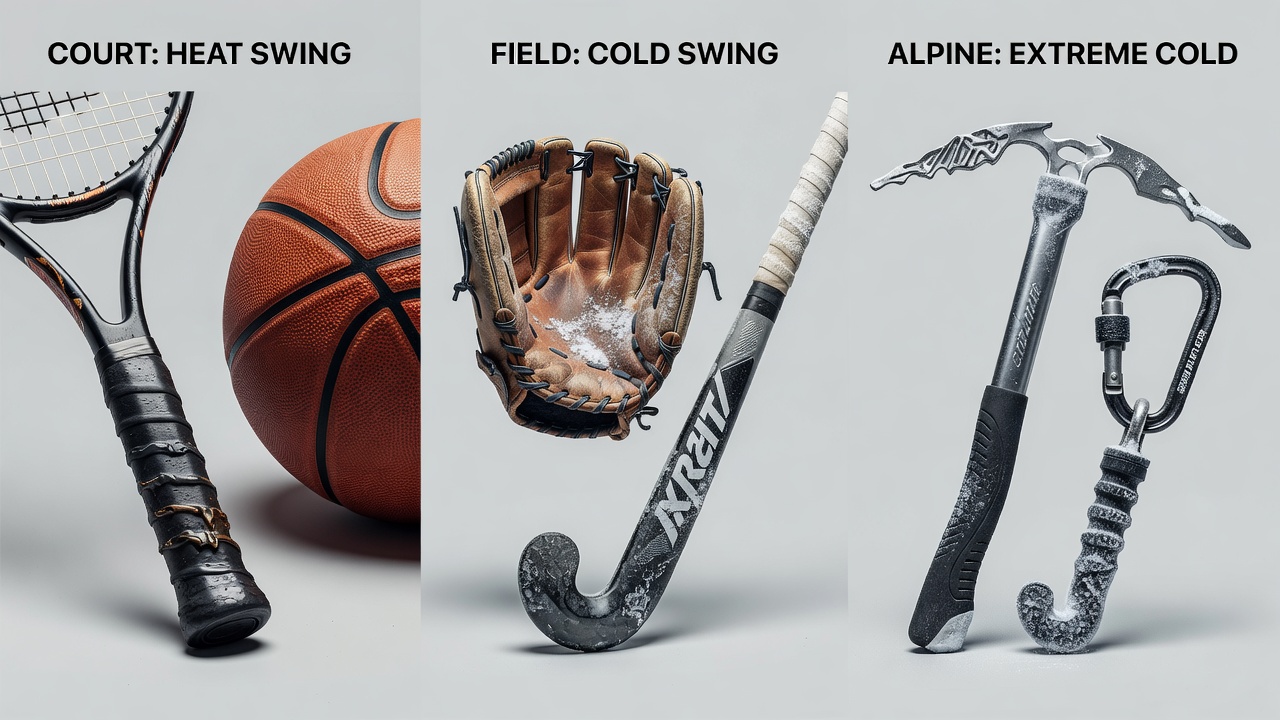
Materials in handheld tools respond to temperature changes through expansion, contraction, and shifts in molecular structure, and these responses directly influence grip textures along with rebound properties across court, field, and alpine settings. Researchers have documented how rubber compounds and polymer blends in handles contract in cold conditions while expanding when heat rises, which modifies surface friction and the elastic return of striking or swinging implements.
Material Behavior Under Thermal Variation
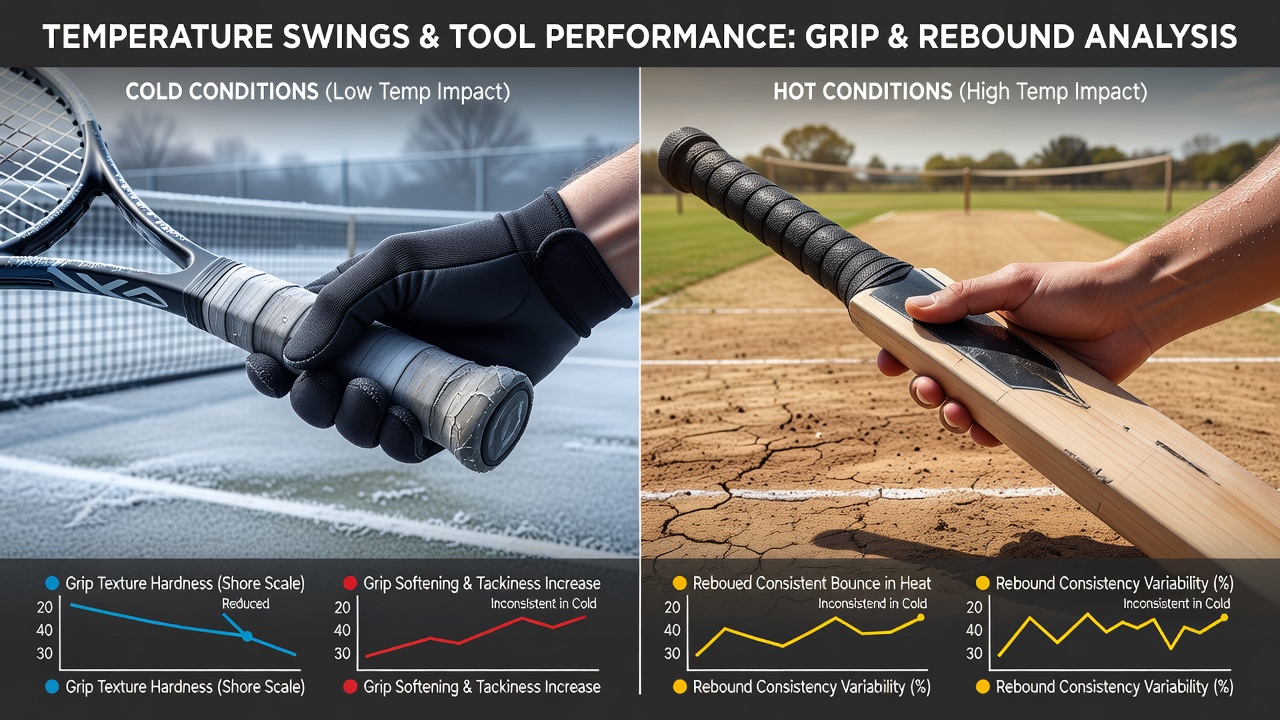
Thermoplastics and elastomers form the core of most grips on rackets, clubs, sticks, and poles, and laboratory measurements show that cooling below 10 degrees Celsius increases hardness in these substances by up to 30 percent, which reduces texture pliability and creates a slicker contact surface. Heat above 30 degrees Celsius softens the same compounds, allowing microscopic surface irregularities to flatten and thereby changing the coefficient of friction that athletes rely on for control.
Rebound consistency depends on the storage and release of elastic energy within the tool frame and handle assembly, and data collected from impact testing indicates that colder temperatures raise the stiffness modulus of composite shafts while warmer conditions lower it, leading to measurable differences in energy return rates during repeated strikes. Studies conducted at institutions in Canada have tracked these modulus shifts in ski poles and hockey sticks, confirming that a 20-degree drop can alter rebound velocity by several percentage points.
Court Discipline Applications
Tennis rackets and pickleball paddles experience indoor climate control fluctuations alongside outdoor exposure, and engineers note that string tension combined with grip material reacts to these swings by altering dwell time on the ball face. When grips harden during early morning sessions in cooler venues, players encounter reduced tackiness that affects spin generation, whereas afternoon heat softens the same surfaces and increases deformation under load.
Field hockey sticks and lacrosse shafts used on outdoor pitches demonstrate parallel patterns, and testing protocols reveal that midday temperature peaks soften polymer overwraps on handles, which changes the rebound angle of the ball upon contact with the striking surface. Equipment managers at professional clubs monitor these shifts through scheduled checks that account for daily thermal cycles rather than static specifications alone.
Field and Alpine Discipline Patterns
Baseball bats and golf clubs transition between storage environments and playing conditions, and material analyses indicate that aluminum alloys paired with rubberized grips expand and contract at different rates, producing micro-gaps that modify both texture feel and impact energy transfer. Cold mornings on northern fields stiffen these interfaces, whereas summer afternoons introduce softening that influences launch consistency.
Alpine disciplines introduce more extreme ranges, and ski poles along with avalanche probes incorporate grips rated for sub-zero performance where butyl rubber compounds maintain flexibility down to minus 20 degrees Celsius before texture becomes glassy and rebound drops sharply. Research from Australian sports engineering groups has examined these thresholds in cross-country equipment, documenting how rapid warming during ascents can cause temporary softening that alters pole plant stability until equilibrium returns.
Testing and Standardization Developments
Standards organizations have begun incorporating variable temperature protocols into certification processes, and protocols scheduled for review in June 2026 aim to require multi-point thermal cycling tests for grips and frames destined for mixed-discipline use. These procedures simulate rapid swings between storage lockers and active play surfaces, providing quantitative data on texture retention and rebound variance that manufacturers must meet for compliance labeling.
Industry reports from the European Committee for Standardization highlight that equipment passing single-temperature benchmarks often fails under dynamic conditions, prompting suppliers to adjust compound formulations with additives that stabilize friction coefficients across broader ranges. Such modifications appear in recent product lines for court rackets and alpine poles alike, where blended polymers show narrower performance deviations during field trials.
Conclusion
Thermal expansion, molecular rearrangement, and energy modulus shifts collectively determine how grip textures and rebound consistency evolve in handheld tools, and documented patterns across court, field, and alpine disciplines demonstrate consistent material responses to temperature gradients. Continued refinement of testing methods supports equipment that maintains specified performance characteristics regardless of environmental exposure.