15 Jun 2026
Tracing biometric sensor placements in standard athletic tools across contact, racket, and aquatic disciplines
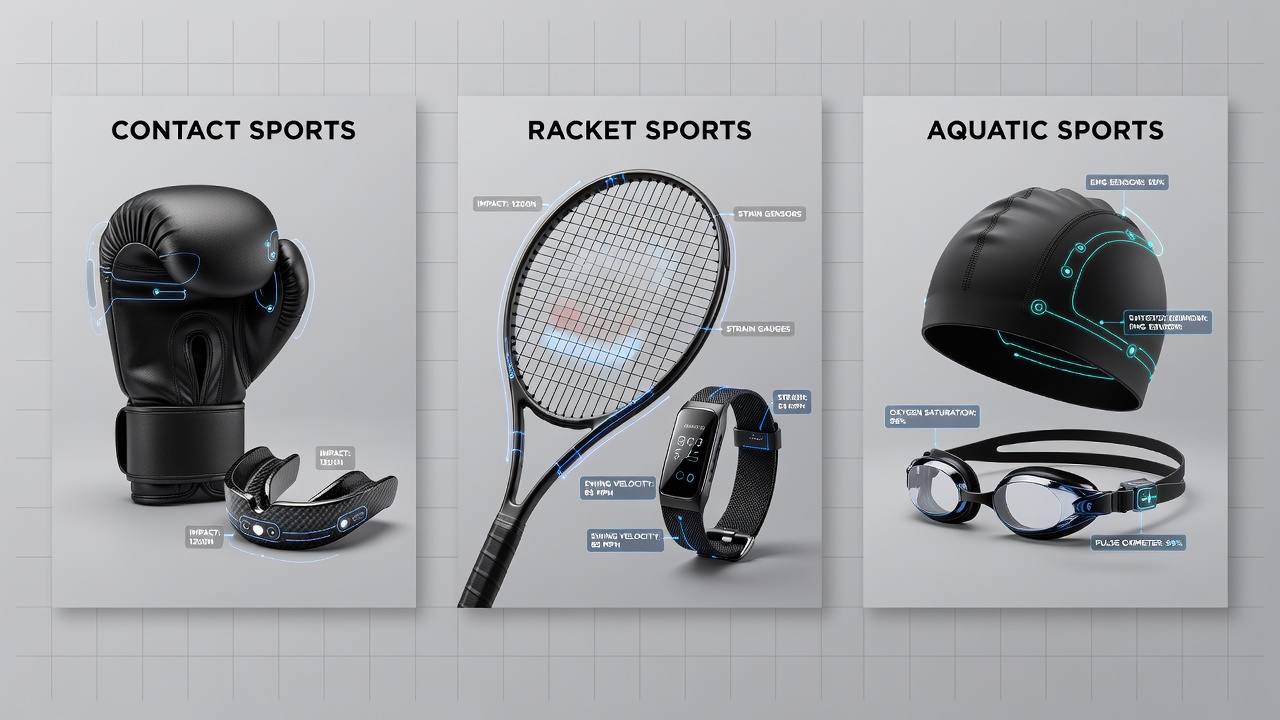
Biometric sensors now appear in many standard athletic tools, and their placements follow patterns that match the physical demands of each discipline. Researchers track these locations to understand how data on heart rate, motion, impact force, and muscle activation gets collected without altering tool performance. Studies from institutions like the Australian Institute of Sport show that placement choices affect measurement accuracy and athlete comfort during extended use.
Contact sports equipment placements
Shoes used in soccer and rugby often carry pressure-sensitive insoles positioned directly beneath the metatarsal heads and heel. These thin layers capture force distribution during tackles and sprints while remaining protected inside the midsole structure. Gloves in boxing integrate accelerometers along the knuckle padding and wrist straps so impact readings align with the direction of punches rather than rotational noise from the forearm. Data from these placements helps trainers adjust technique without requiring separate monitoring devices.
Helmets in American football and hockey position gyroscopic sensors near the crown and temple areas. This arrangement records head acceleration vectors during collisions and transmits readings through embedded wiring that routes along the interior padding seams. Observers note that centering these units reduces interference from external straps and maintains balance across repeated impacts.
Racket sports sensor integration
Tennis rackets place strain gauges along the throat and handle core where frame flex occurs most during ball contact. These sensors detect vibration frequencies that correlate with grip tension and swing speed. Badminton rackets follow similar patterns yet position optical motion trackers at the shaft midpoint because lighter frames transmit different oscillation patterns. Researchers at the University of Waterloo documented that shaft placement improves stroke classification accuracy compared with butt-cap mounting alone.
Table tennis paddles embed smaller force-sensitive resistors beneath the rubber surface layers. Placement here captures spin generation at the moment of paddle-ball interaction while the thin profile avoids changing rebound characteristics. Equipment manufacturers route signal lines through the handle so players experience no added weight or texture changes.
Aquatic discipline sensor locations
Swimming goggles incorporate heart-rate monitors along the temple contact points where skin remains stable during turns and strokes. Electrodes sit flush against the silicone seals to maintain consistent readings through water turbulence. Swim caps carry accelerometers at the crown to track head position and stroke timing without external protrusions that could increase drag. Full-body suits position additional pressure sensors along the torso seams to monitor body roll angles during freestyle and butterfly events.
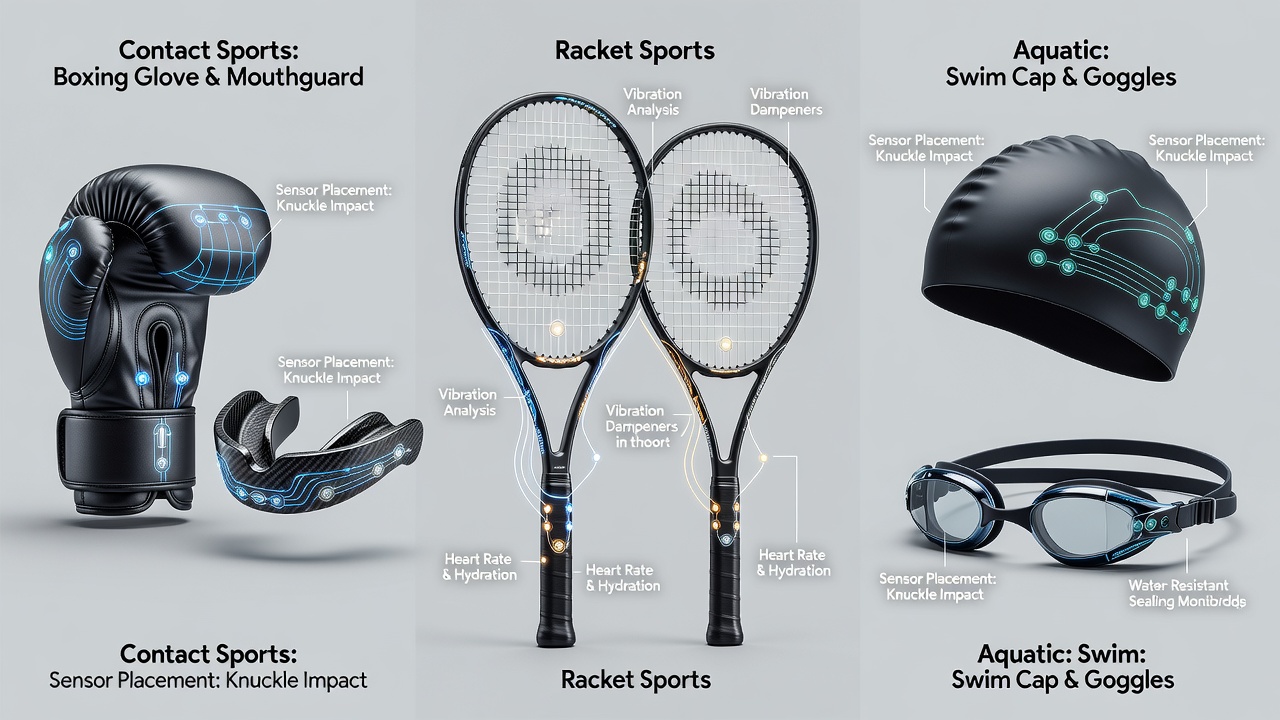
Kickboards used in training drills sometimes include embedded inertial units near the leading edge. This location records propulsion force from leg kicks while the board itself shields the electronics from direct water pressure. Canoe and kayak paddles place torque sensors at the blade-shaft junction because this point experiences peak bending loads during each stroke cycle. Data transmission occurs through waterproof connectors that detach for equipment storage and maintenance.
Calibration and data transmission patterns
Across all three categories, wireless modules sit close to the primary sensing elements to limit signal loss. Contact tools route antennas along non-impact zones such as the upper tongue of shoes or the rear helmet shell. Racket handles often contain the battery and transmitter near the butt end where grip pressure remains lower. Aquatic tools use sealed inductive charging ports that avoid exposed contacts while allowing data downloads between sessions.
Placement consistency matters because athletes rotate through multiple equipment sets during a season. Standards developed by European sports technology working groups require reference marks on tools so replacement units maintain the same relative sensor positions. As of June 2026, several national training centers report that standardized mounting templates have reduced calibration time by measurable margins during equipment handovers.
Cross-discipline comparisons
Contact equipment emphasizes protection of sensors from direct collision forces, while racket tools focus on vibration isolation and balance preservation. Aquatic placements prioritize hydrodynamic profiles and waterproof integrity. These differing priorities produce distinct wiring paths and mounting adhesives yet share common goals of minimal added mass and unobstructed athlete movement. One study revealed that repositioning a single accelerometer by only a few centimeters in a racket frame altered recorded swing metrics enough to affect training recommendations.
Conclusion
Biometric sensor placements in athletic tools reflect the mechanical realities of each sport category. Contact, racket, and aquatic equipment each demand tailored mounting strategies that preserve performance while delivering reliable physiological and biomechanical data. Continued refinement of these locations supports consistent measurement across training environments and competitive schedules.