18 May 2026
Uncovering the Engineering Principles Behind Traction and Control Features in Shoes and Rackets for Multiple Field and Court Sports
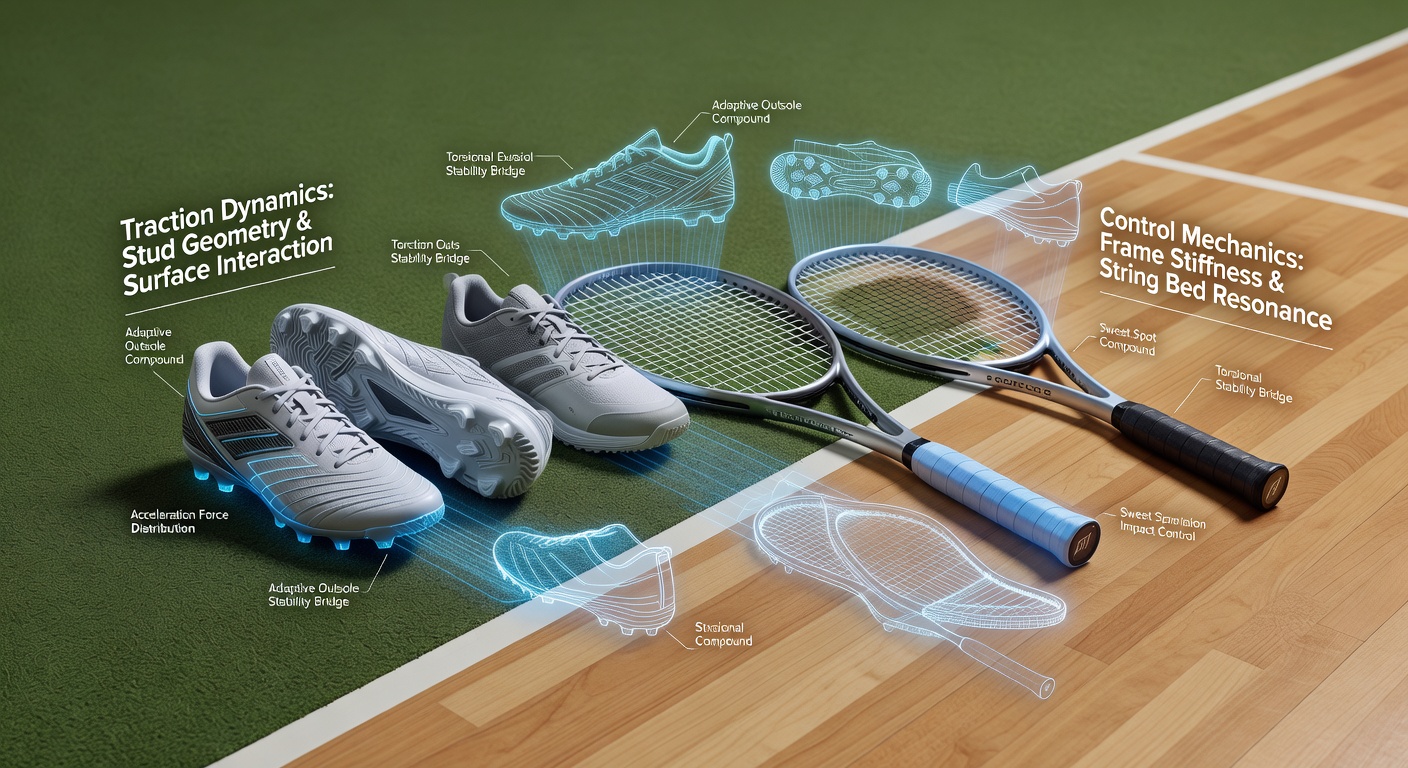
Engineering teams focus on friction coefficients and surface interactions when they design traction elements for athletic footwear, and they apply similar physics-based approaches to string tension and frame stiffness in rackets used across field and court environments. These principles determine how athletes maintain stability during rapid directional changes while also managing energy transfer that affects speed and accuracy in play.
Core Physics of Traction in Footwear
Designers calculate the coefficient of friction between outsole materials and playing surfaces to optimize grip without excessive resistance that could increase injury risk, and they test prototypes on synthetic turf, natural grass, hardwood, and clay to verify performance under varied conditions. Multi-directional stud patterns in soccer cleats distribute force across multiple axes while herringbone arrangements on court shoes channel lateral movements more effectively than straight-line treads.
Thermoplastic polyurethane compounds appear frequently in modern outsoles because they combine durability with flexibility, and manufacturers adjust durometer ratings to match specific sport demands such as the higher abrasion tolerance required for basketball compared with the lighter touch preferred in tennis. Research from the University of Calgary demonstrates how micro-textured rubber surfaces can raise static friction values by up to 18 percent on indoor courts without compromising forward propulsion.
Material Science Behind Control Features
Carbon fiber plates embedded in midsoles redirect ground reaction forces during cutting maneuvers, and engineers position these plates at angles that align with typical ankle inversion patterns observed in field sports. Cushioning foams with varying densities sit above these plates to absorb impact while preserving the responsiveness athletes need for quick stops and starts.
Studies conducted at Loughborough University’s Sports Technology Institute reveal that zoned traction zones, where harder compounds occupy high-wear areas and softer materials fill flex grooves, extend outsole longevity by 25 percent across repeated trials on both grass and artificial pitches. Such zoning also reduces the accumulation of debris that otherwise diminishes grip over the course of a match.
Parallel Principles in Racket Design
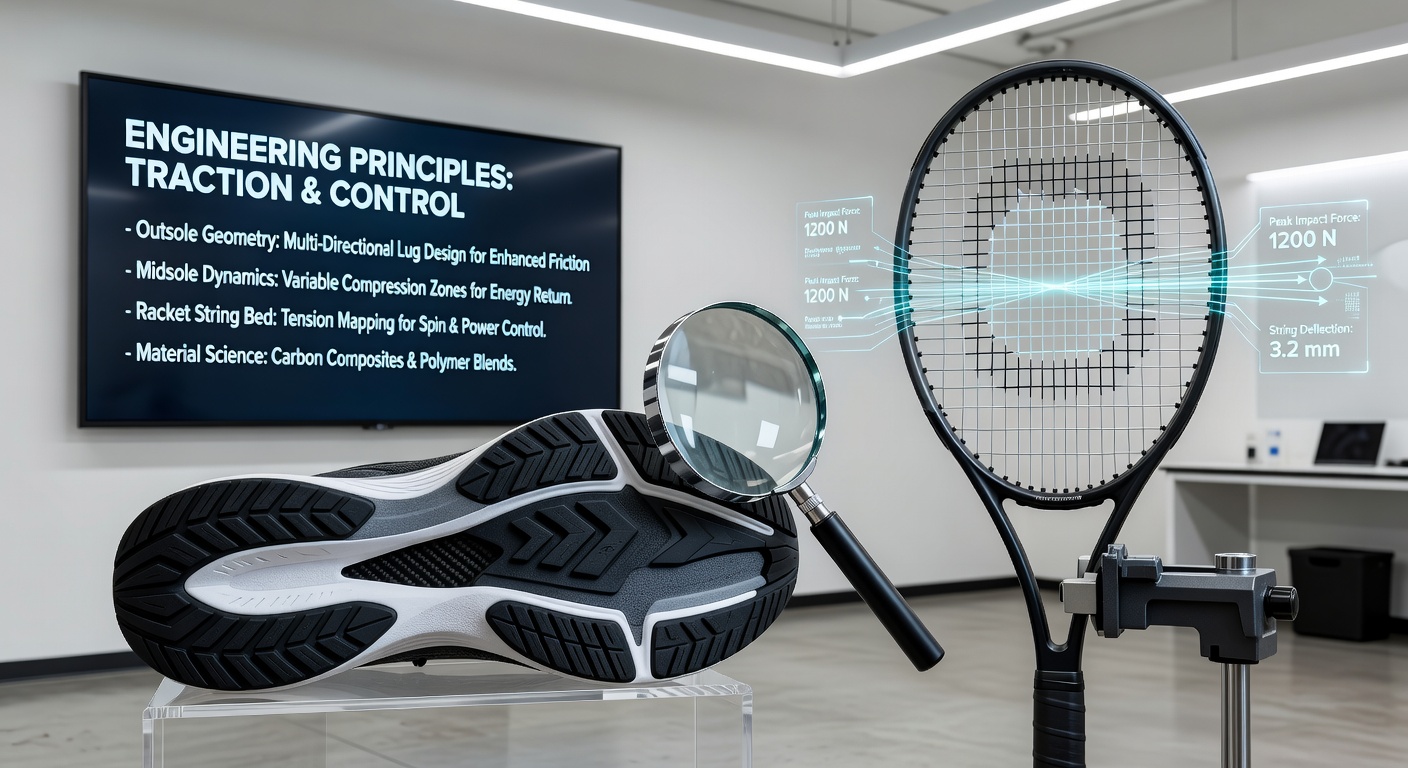
Racket engineers tune string tension and pattern density to balance power and precision, and they select frame materials whose flexural modulus allows controlled deformation upon ball impact. Open string patterns generate more spin through greater string movement, whereas dense patterns limit deflection and produce flatter trajectories favored in baseline rallies.
Graphite and graphene composites provide the stiffness-to-weight ratios that let players generate racket head speed without sacrificing torsional stability, and damping inserts placed at the throat reduce unwanted vibrations that travel up the arm. Data collected by the International Tennis Federation shows that frames with variable beam widths maintain consistent control across a wider range of swing speeds than uniform-profile designs.
Cross-Sport Applications and Testing Protocols
Many traction technologies transfer directly from soccer boots to basketball shoes because both sports require explosive lateral pushes, yet the specific stud lengths and spacing differ to accommodate surface hardness variations. Racket grip systems likewise borrow from shoe upper constructions when manufacturers incorporate moisture-wicking wraps that maintain friction even under heavy perspiration.
As product development cycles advance into May 2026, laboratories increasingly rely on robotic testing rigs that simulate thousands of cutting angles and impact velocities within hours rather than days, and these rigs feed real-time data back to design software for rapid iteration. Observers note that such accelerated protocols allow brands to release updated models more frequently while still meeting performance benchmarks established by governing bodies in each sport.
Future Directions in Integrated Systems
Engineers now explore adaptive traction elements that respond to moisture levels on the playing surface, and early prototypes use hydrophilic polymers that expand slightly when wet to maintain contact area. Similar smart materials appear in racket handles where embedded sensors track grip pressure and feed information to training apps for technique refinement.
Those who study biomechanics emphasize that successful control features must account for individual athlete anthropometrics rather than relying solely on average population data, and custom-molded insoles paired with adjustable string beds represent one practical outcome of this approach. Continued collaboration between material scientists and sports federations supports incremental gains that accumulate across equipment categories.
Conclusion
Engineering principles centered on friction management, force redirection, and material responsiveness underpin the traction and control characteristics found in shoes and rackets across multiple disciplines, and ongoing laboratory refinements continue to narrow the gap between theoretical models and on-field results. Athletes benefit from these incremental advances through equipment that supports both safety and performance consistency regardless of surface or sport-specific movement patterns.